1
 →
→
Degoogled maps & turn-by-turn navigation for Android - MapLibre + Overture POI, no Google Play Services
PimpinPumpkin/Vela is an open-source project on GitHub, mainly written in Kotlin. Degoogled maps & turn-by-turn navigation for Android - MapLibre + Overture POI, no Google Play Services It currently holds 740 stars and 31 forks with 11 open issues, and was last pushed on 2026-10-06 (repository created 2026-06-15).
Git Homed tracks it on the Today's Trending board, currently at rank #42 with 155 new stars today.
Google Maps, degoogled.
Live traffic, real place data and turn-by-turn navigation, with zero Google on your phone.





Install · What you get · Docs · FAQ · The book · Privacy · How it works · Build · Discussions · Translate

[!warning]
Vela is in beta, so you may run into bugs. If you do, open an issue and fill out the
template. Nightlies and canary builds are newer still and less tested than the weekly stable.
A degoogled maps & navigation client for Android - *what NewPipe is to YouTube, for Google Maps.* The map itself is open data: open vector tiles for the basemap, and Vela data for the places on it - Overture Maps and AllThePlaces, positioned with OpenStreetMap, baked into tiles in this repo and streamed from its releases - so browsing around never asks Google anything. Routes come from the open OSRM router. Search, tap a place or ask for a route and the device itself scrapes Google's public web endpoints (per-user, no backend) for the things only Google does well: search, hours, reviews and photos, and traffic-aware ETAs. Built to run on GrapheneOS and other no-GMS ROMs.
It is not a Google Maps wrapper. The map is a native Android app drawing open vector tiles (Jetpack Compose and MapLibre) - no Google SDK, no Play Services, no API key, nothing to sign in to. It looks like Google Maps because that is the point; underneath, almost none of it is.
| What you do | What reaches Google | | --- | --- | | Pan, zoom, browse the map | Nothing. Tiles from OpenFreeMap, streets and labels from OpenStreetMap | | The places drawn on the map | Nothing, by default. Open data baked in this repo: Overture Maps and AllThePlaces, positioned with OpenStreetMap | | Drop a pin, tap a house number | Nothing. OpenStreetMap's Nominatim names the spot | | Read a departure board | Nothing, for the stops Vela draws from open transit data: the board comes from Transitous. Where Transitous has no coverage, Vela falls back to the stop's Google page | | Ask for directions | The traffic, and only the traffic. The route itself is computed by open OSRM, or on the phone from an OsmAnd-format region file (Google's own route only if the open router is down); Google is asked anonymously for the live ETA on top of it, and every couple of minutes while you drive, which Settings → Navigation turns off. For a walk Google is asked once for its route, used only when it is much shorter | | Type a search | Your text, anonymously, like a logged-out browser. Typing sends Google's own autocomplete each time you pause; submitting sends a Google search. Text that starts with a house number also goes to the open Photon geocoder | | Tap a place | An anonymous lookup of that place - no account, no app key. Hours, reviews and photos are the things only Google does well. Settings → Places can stop the lookup for places tapped on the map | | Everything you save | Nothing, ever. No account, no Vela backend, no Vela telemetry; saved places, history and settings stay on the phone |
Download a region and it keeps working with no network: the map, search, routing and turn-by-turn navigation. Offline, or with Settings → Privacy → Use Vela without Google, the answer becomes nothing at all. A few things only a real browser engine gets, the first page of a place's reviews among them, are read from a Google page in an offscreen WebView, anonymously; the full list is in PRIVACY.md.
The full comparison against the Google Maps app and Google Maps web is below, and the per-request detail is in PRIVACY.md.
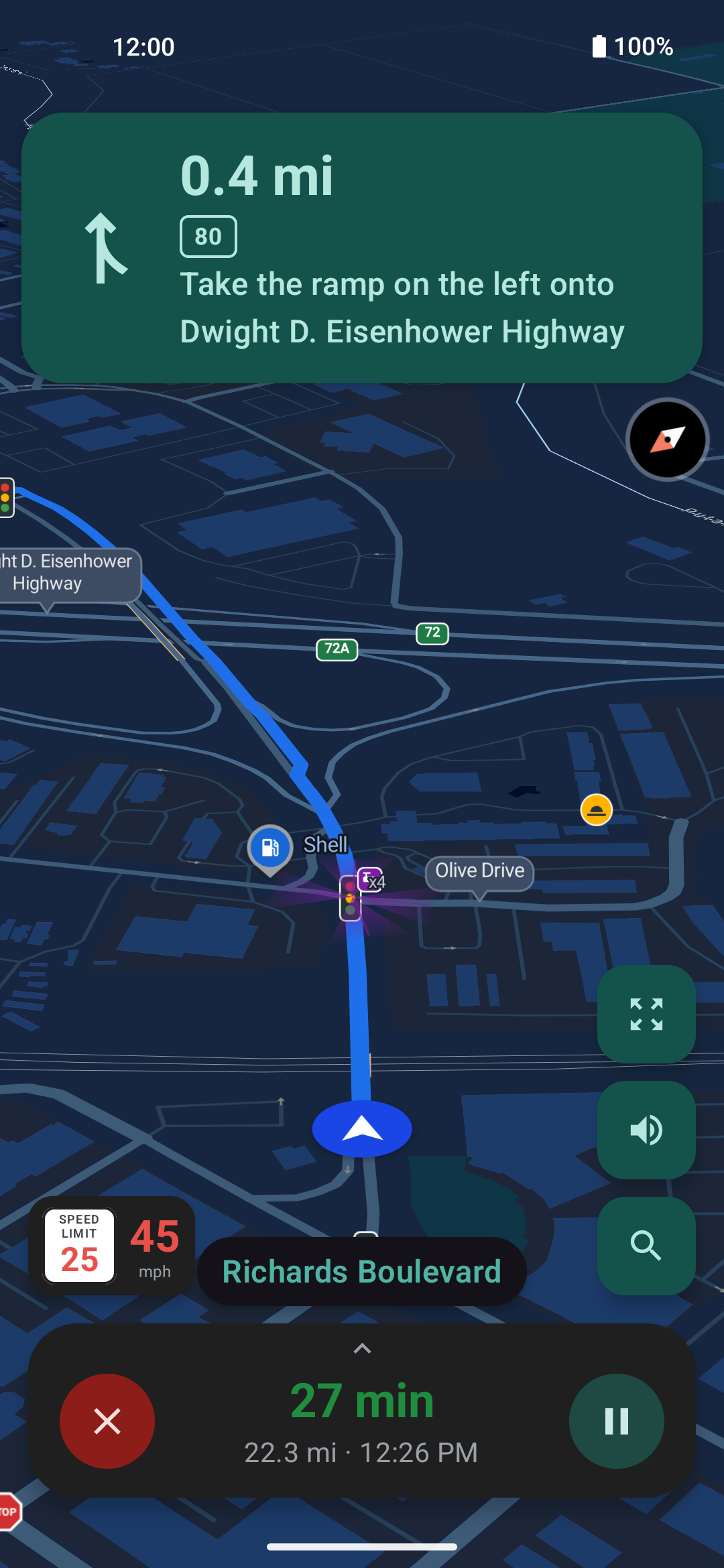
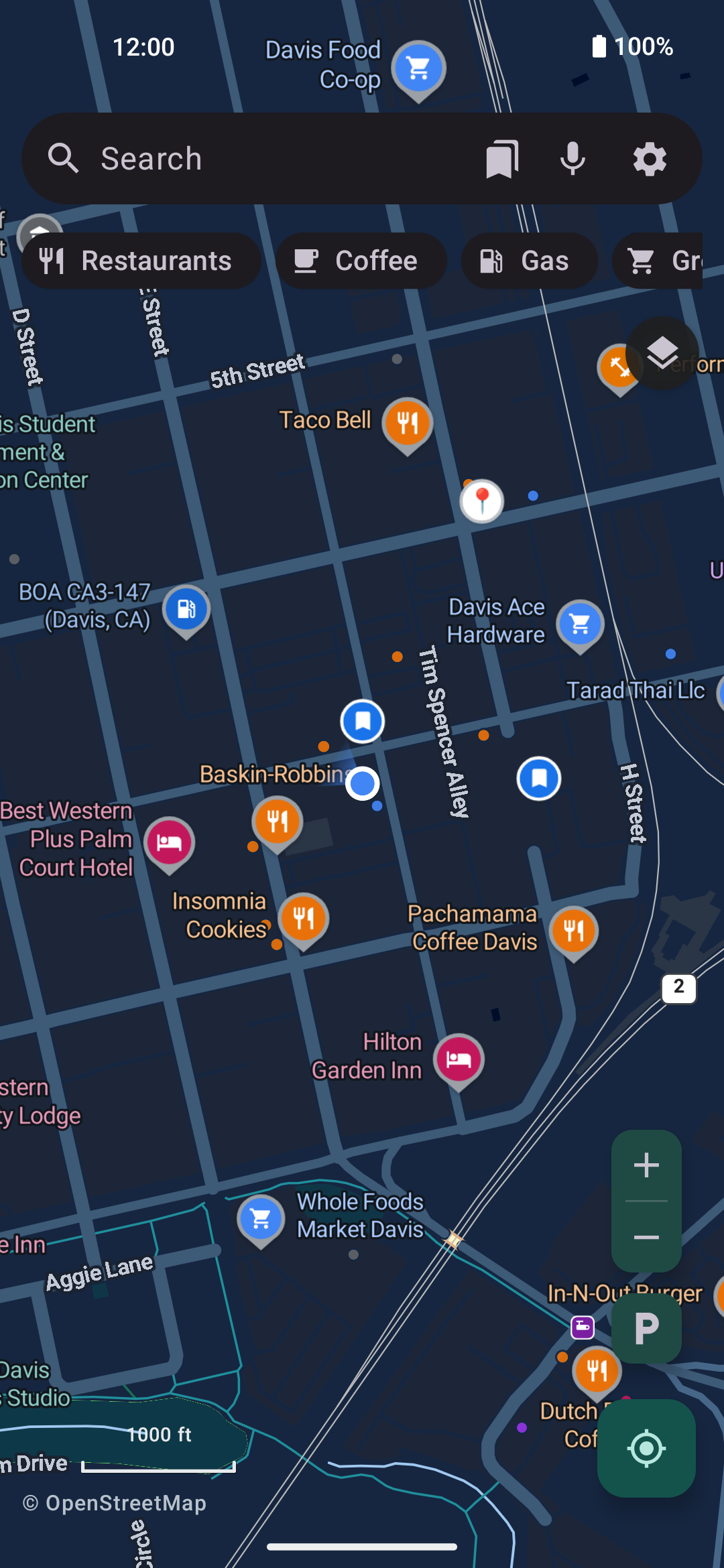
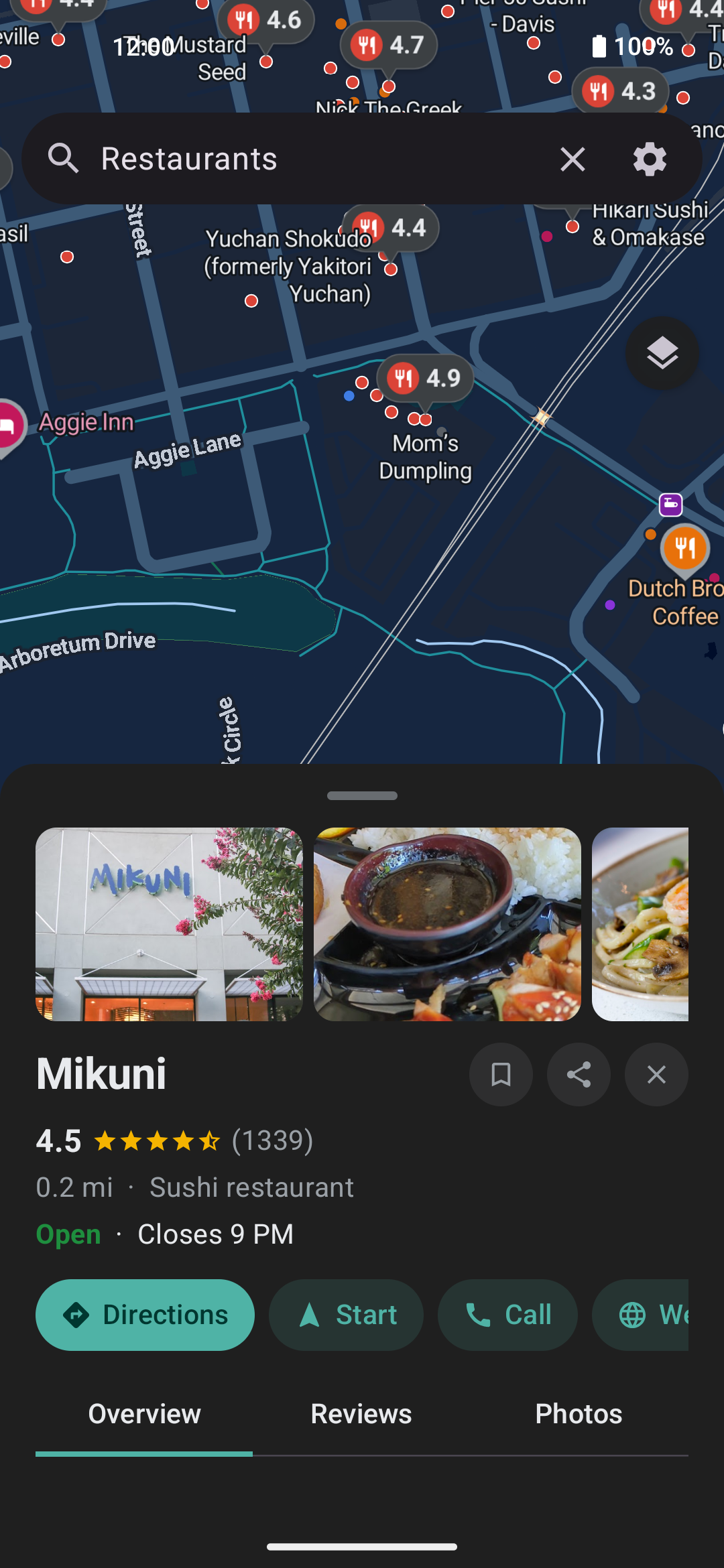
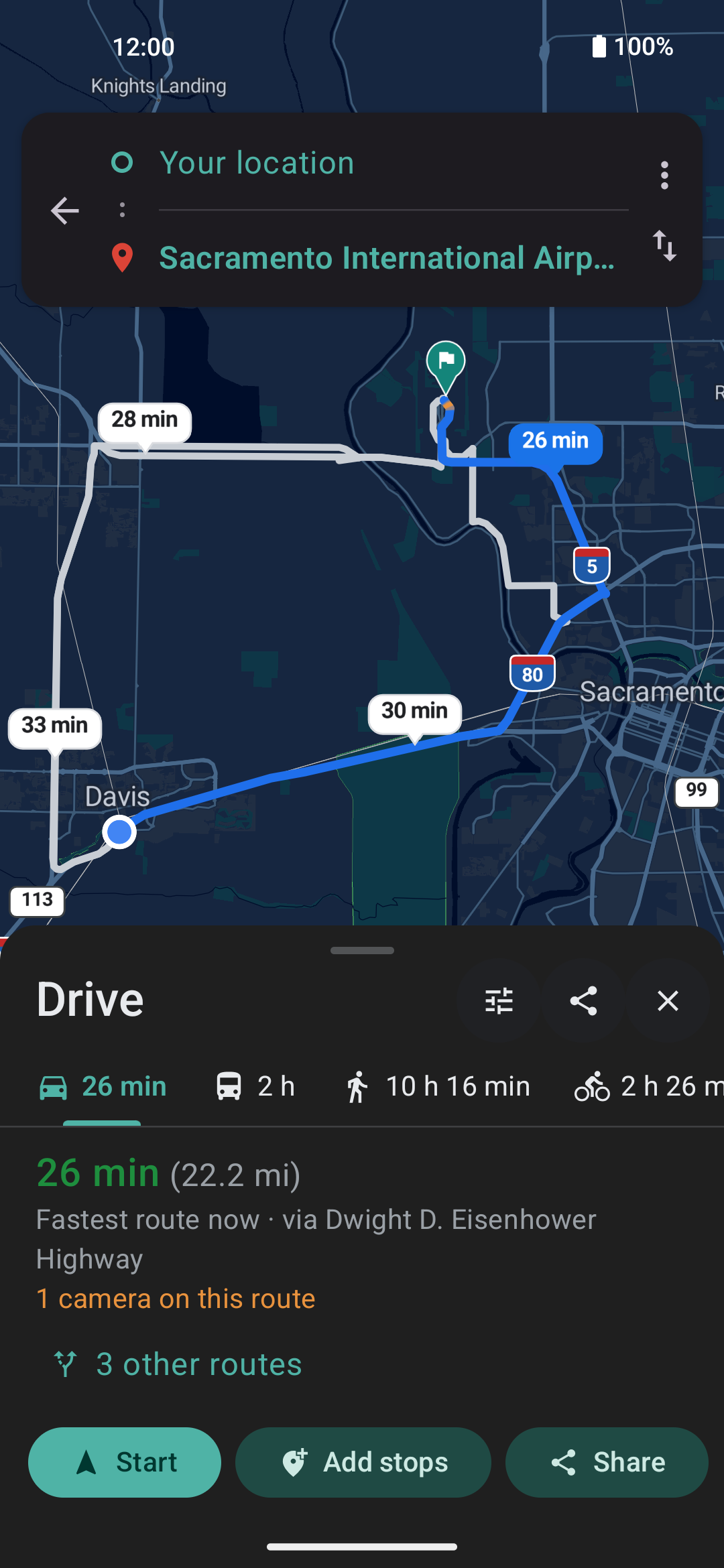
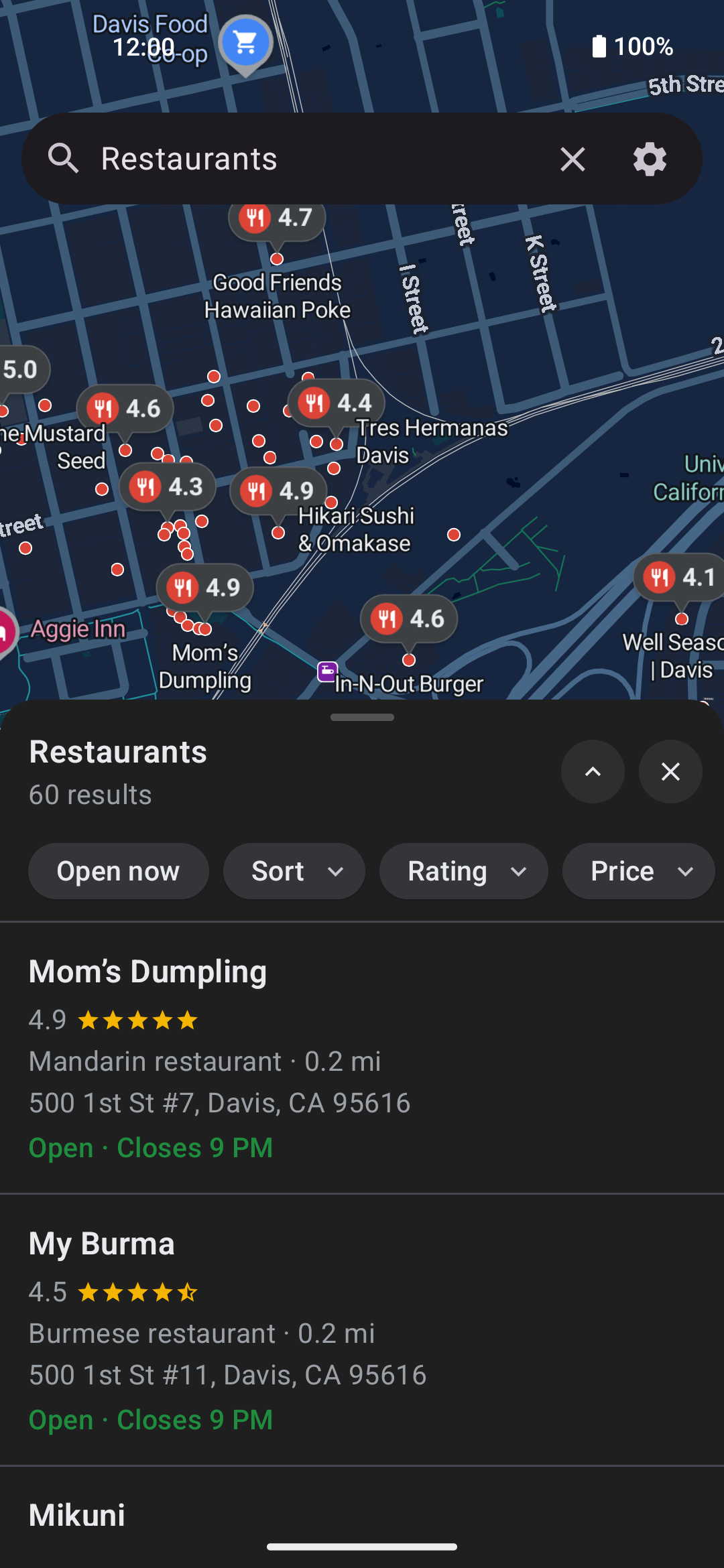
| Navigation | Map & search | Place details | Directions | Search results |
|:-:|:-:|:-:|:-:|:-:|
|  |
|  |
|  |
|  |
|  |
|
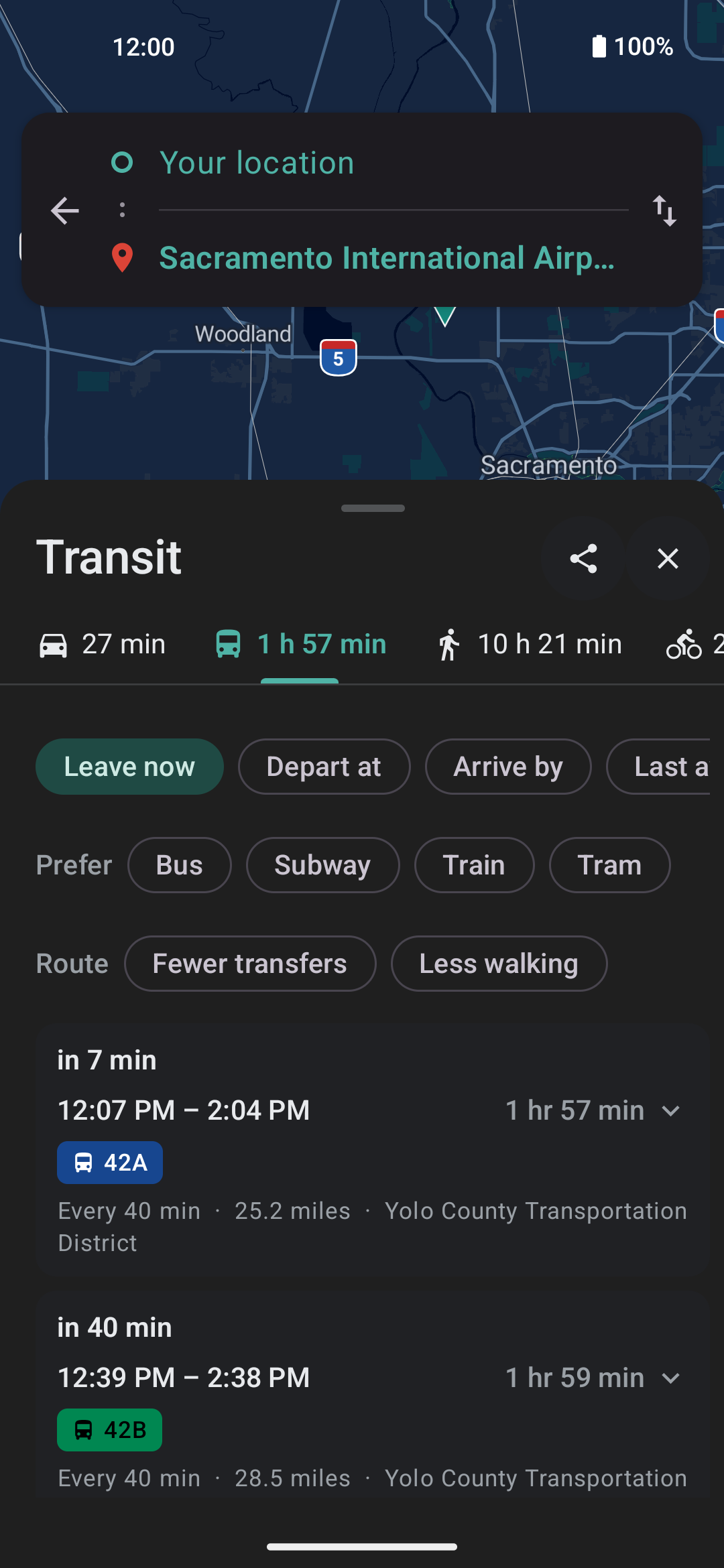
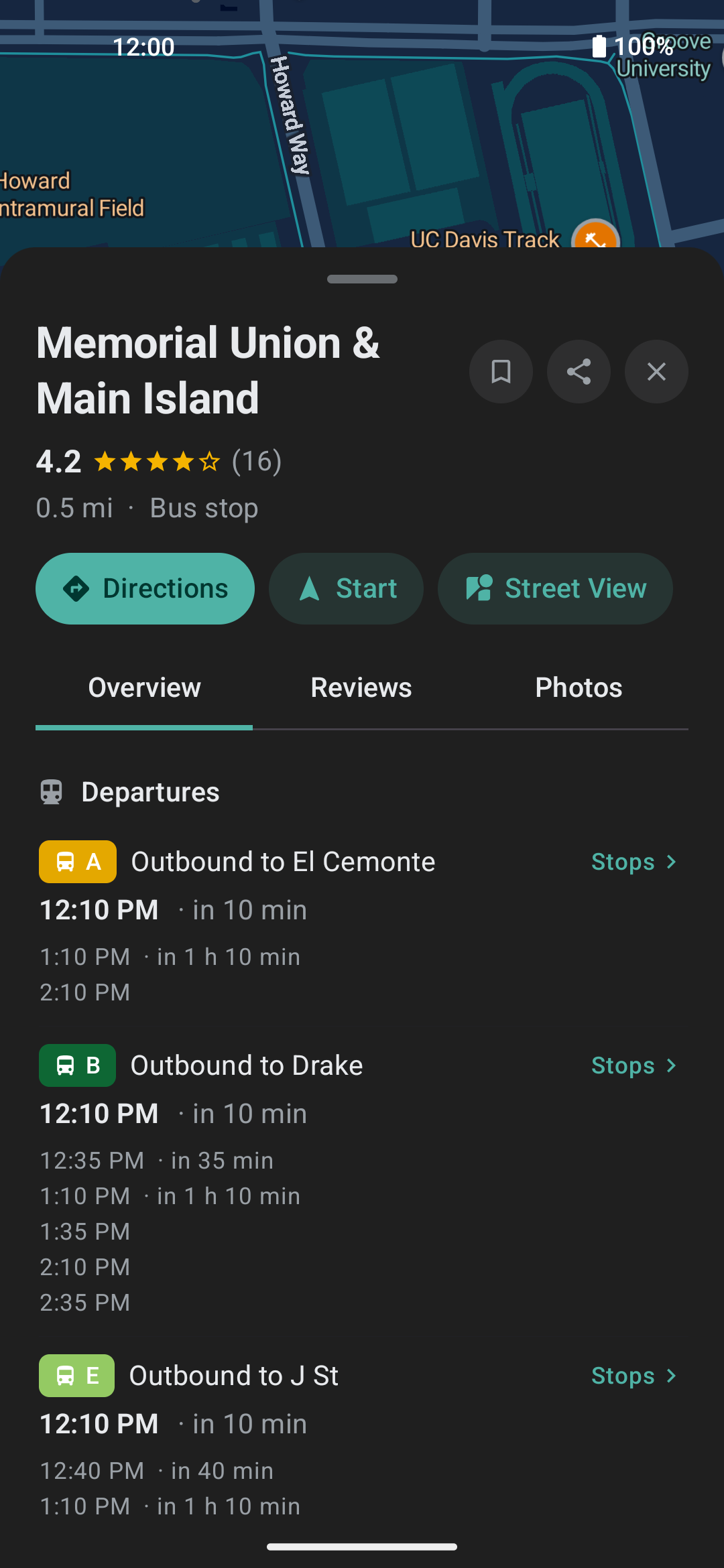
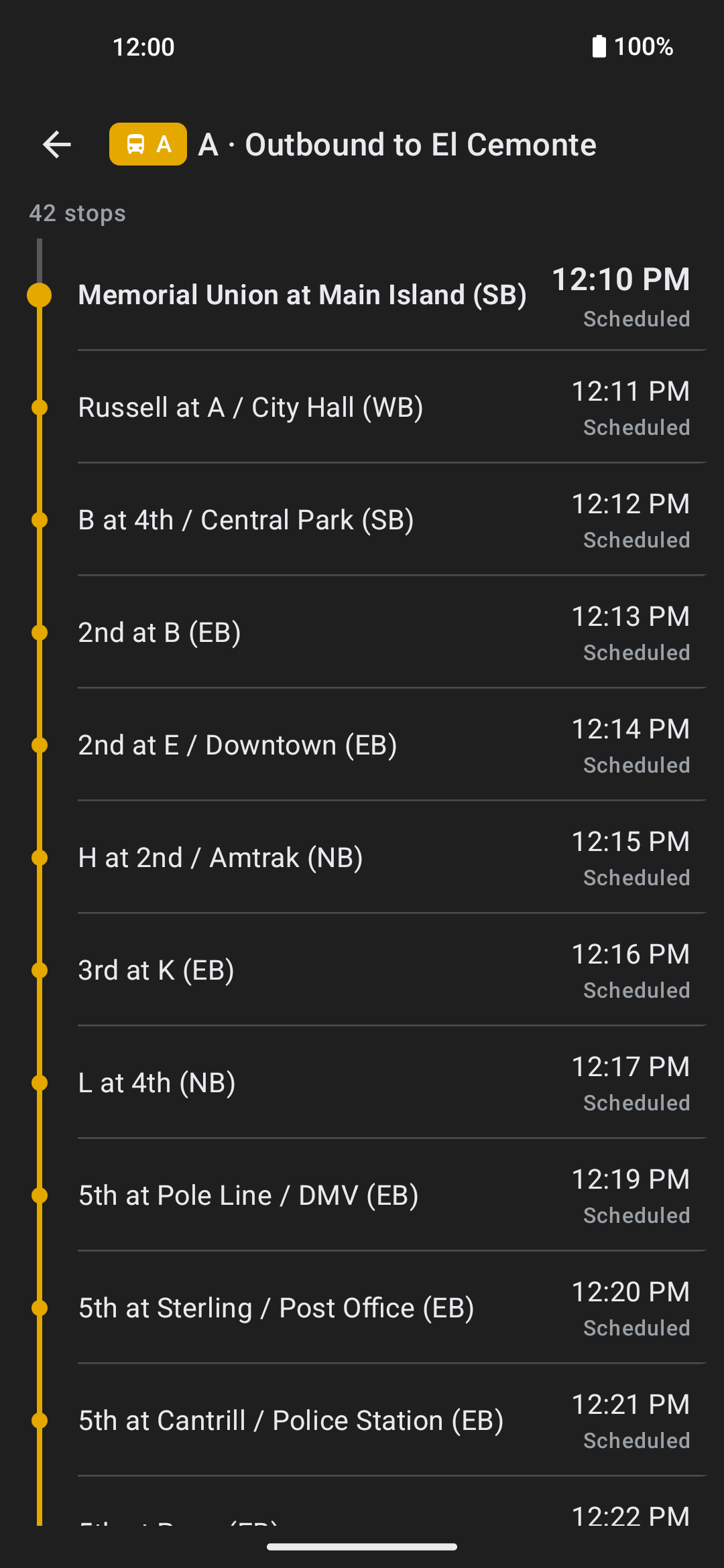
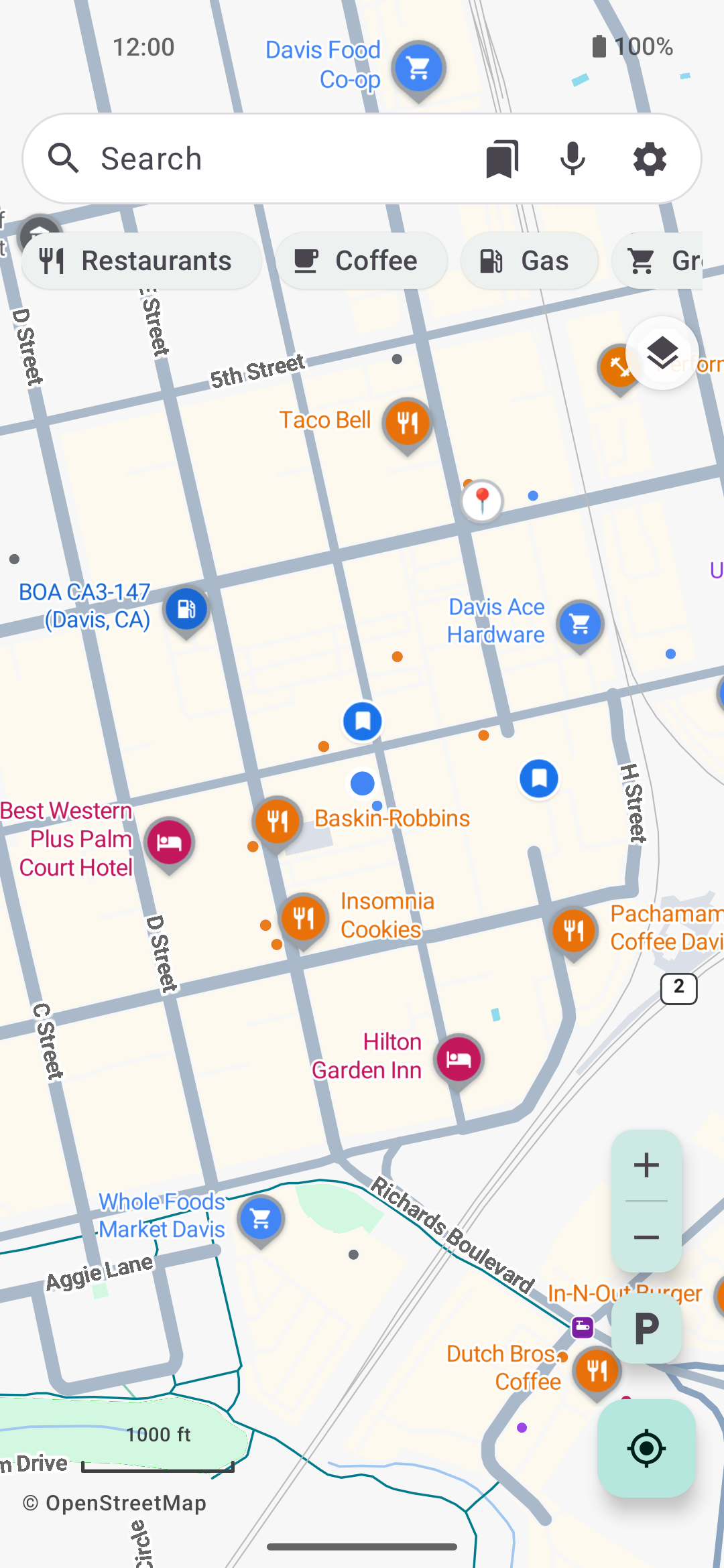
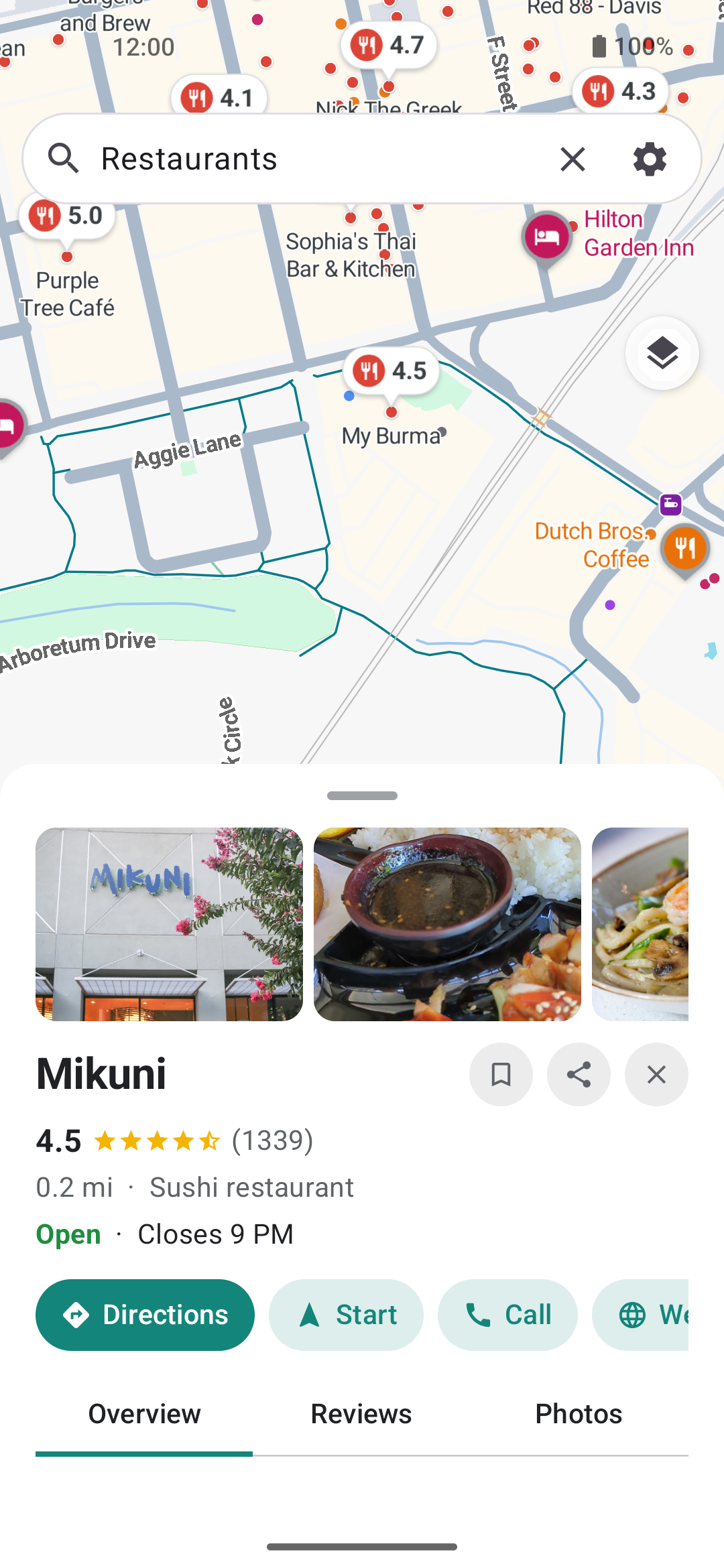
| Public transit | Departure board | Stops on the line | Light theme - map | Light theme - place |
|:-:|:-:|:-:|:-:|:-:|
|  |
|  |
|  |
|  |
|  |
|
*Turn-by-turn with lane guidance, route shields and the speedometer; the keyless OpenFreeMap basemap wearing Google's own sampled colors and Google Sans Flex labels, with rated POI icons and the tiered dots; live place data; the directions panel with alternates, traffic in plain words and the avoid toggles; live departure boards with a tap-through stop list for every route; and the in-app light/dark themes (decoupled from the OS).*

Obtainium auto-tracks the weekly stable release. Turn on "include prereleases" and you get the nightly channel instead.
The F-Droid badge is
Vela's own repository, not the f-droid.org catalog - add
https://pimpinpumpkin.github.io/Vela/repo to any F-Droid client and it serves
the same signed APKs, weekly stable by default (fingerprint and nightly-channel
setup in FDROID.md). Or grab an APK straight from
Releases.
Every Vela APK, from any channel, is signed with the same key. Its certificate fingerprint is:
SHA-256 29:93:8B:48:58:06:3E:42:E6:77:FF:95:C9:01:CD:48:24:8A:7F:03:2A:3A:E8:5F:9B:9E:56:17:56:8B:0D:36
Check a downloaded file against it before installing:
apksigner verify --print-certs vela-maps-*.apk
On the phone, App Verifier checks the same thing. It wants the package name on the first line and the fingerprint on the second, so paste this block, not the line above:
app.vela
29:93:8B:48:58:06:3E:42:E6:77:FF:95:C9:01:CD:48:24:8A:7F:03:2A:3A:E8:5F:9B:9E:56:17:56:8B:0D:36
Android enforces this for you after the first install: an update signed with a different key is refused, so a build that installs over your existing Vela came from the same place this one did.
This is the certificate the app is signed with, and it stays the same across releases. It is not a checksum of a particular APK, and it is not the same as the F-Droid repo fingerprint in FDROID.md, which signs the repo index rather than the app.
There's also a one-page tour at pimpinpumpkin.github.io/Vela, and every doc in this repository (the FAQ, the book, the full specification) is published there as a searchable site at pimpinpumpkin.github.io/Vela/docs.

---
🔊 Hear it - the actual in-app voice at the default pace:
https://github.com/user-attachments/assets/17f246e4-51c8-4d01-998b-dcd7f29dc15f
maps.app.goo.gl share link into theSPEC.md sections 3 and 11 for details.
The complete running feature list lives in FEATURES.md.
Where the places on the map come from, what each feature uses, and how to run Vela with no Google contact at all: docs/FAQ.md. The short version is that the map and its businesses are open data by default, and Google answers searches, place pages and live traffic.
A phone without Google Play Services cannot run Google Maps, and the open map datasets fall well short on search, reviews, hours, and live traffic. So for those, Vela is a client of Google's public web endpoints. It asks them the same way a logged-out browser does, from each user's own phone, with no account, no shared API key, and no server in the middle. NewPipe does the same for YouTube. There are no ads, and your search history, saved places, and settings stay on the phone. If you run GrapheneOS or another no-GMS ROM, this gets you working maps back.
The map itself, the streets, the labels, and house numbers come from OpenStreetMap (in much of the US the house numbers come from OpenAddresses instead), and routes come from the open OSRM router. Google is only used for place details, search, and live traffic, plus extras you open yourself such as Street View and transit directions. So street names and house numbers can differ from what Google Maps shows, and how much detail you see offline depends on how well OpenStreetMap covers your area. I'm thinking of ways to improve OSM and fill the gaps in the data. Stay tuned.
There is no Vela backend, no account, and no Vela telemetry. Vela fetches from Google
directly from your phone like a logged-out browser - Google sees your IP, query, and
map area, but not a Google account or any app key, much like using
google.com/maps in an incognito window. Google does keep its own logged-out session
cookie; Vela starts a new one every week by default (Settings → Privacy → Google
session: weekly, daily, or every launch, plus a button to start one now). Your saved
places, history, and settings never leave the device. Read the full breakdown of
exactly what each service receives → PRIVACY.md.
The short version: Google shrinks from knowing who you are and everywhere you go to occasionally answering an anonymous question. With the default place source your map browsing never reaches Google at all, and your GPS trace is never uploaded anywhere. While you're actively navigating, Vela does ask Google for fresh traffic from your current position every couple of minutes - that's what powers the faster-route offers and the live arrival time - and that re-check can be turned off in Settings → Navigation ("Live traffic re-checks while navigating"); off-course re-routes remain, since turn-by-turn can't work without them.
| What Google gets | Google Maps app | Google Maps web | Vela | | --- | --- | --- | --- | | Tied to your Google account | Yes, always signed in | Yes unless incognito | Never - there is no login | | A persistent device identifier | Yes (device + ad IDs via Play Services) | Browser cookies | No account, no app key; a logged-out Google session cookie that Vela replaces weekly by default, and an IP like any website visitor | | Your precise GPS position | Continuously while open, plus Location History if enabled | While the tab is open | Never while browsing - position stays on the phone. Searches send the map area you are looking at and, to rank places near you first, can ask about a small area around you; a route from your location sends that point as the start. While navigating, anonymous re-routes and the optional live-traffic re-check send your current position (toggleable in Settings → Navigation) | | Every pan and zoom of the map | Yes - their servers render the map | Yes | No, by default - map tiles come from OpenFreeMap and the places on them from Vela's own data, so Google never sees you browse | | Your searches | Yes, saved to your account history | Yes | The text reaches Google anonymously, as you type (autocomplete) and when you search | | Place pages you open | Yes | Yes | The place lookup reaches Google anonymously, under that logged-out session cookie | | Turn-by-turn routes | Yes, full trip telemetry | Yes | Routing runs on open OSRM, or OsmAnd-format region files on the phone; Google answers anonymous traffic checks - at planning, and during the drive for re-routes and the optional faster-route scanning | | Saved places, home, work | Stored on their servers | Stored on their servers | Stored only on your phone | | Ad profile building | Feeds your ads profile | Feeds your ads profile | Nothing to attach it to | | Works with no Google contact at all | No | No | Yes - one switch (Settings → Privacy → Use Vela without Google), and downloaded regions show the map, search, route, and navigate fully offline |
Full per-request detail is in PRIVACY.md.
Every capability, the method behind it, and the file to read first is laid out in SPEC.md, the authoritative technical specification: the basemap, the places bake, the Google extractor, open routing, navigation, the offline stack and the signed remote-repair channel.
| File | What's in it |
|---|---|
| README.md | This - what Vela is, why, and the privacy comparison |
| SPEC.md | Every technical rule, contract, constant and constraint |
| docs/BUILDING.md | Building from source, module architecture, and the release pipeline |
| docs/LANGUAGES.md | The 15 supported languages, layer by layer (UI, spoken nav, neural voice, dictation), and how to add one |
| docs/TRANSLATING.md | Translating Vela - in the browser on Weblate, or edit one file and open a PR |
| FEATURES.md | The full, categorized list of every shipped capability (the encyclopedia) |
| ROADMAP.md | What is still open + the big bets (self-hosted tiles, OSM contributions, a Play listing, opt-in telemetry, a Vela-own traffic layer); shipped and dead-end entries live in docs/ROADMAP-HISTORY.md |
| PRIVACY.md | Exactly what each Google endpoint receives, per request |
| CLAUDE.md | Build rules, module layout, and the hard-won gotchas - for contributors (human or AI) |
| docs/dpad.md | D-pad / no-touchscreen operation - design, findings, per-surface audit, and the merge-with-upstream policy |
| docs/book/ | Subsystem explainers: how places rank, when data is rebaked, what the camera rules are |
| docs/FAQ.md | The questions people ask first, including what each feature sends to Google |
LocationManager, never FusedLocationProviderClient. OnEverything shipped so far is in FEATURES.md (the complete list) and the release notes of each build. Still open (details in ROADMAP.md):
Not going to happen - anything that needs you to sign in to Google or hand data to a backend: contributing reviews/photos/edits, live location sharing and share-ETA, a location timeline, and the login-gated data Google strips from anonymous requests (live busyness). Vela's whole point is that no account and no server ever sees you.
Vela Maps (app.vela) - the navigator's constellation "the Sails", and
"sail" in several languages.
Read CONTRIBUTING.md first - it covers the hard rules (no
backend, no static Google keys, degoogled runtime, the :core/:app module
boundary, docs-in-the-same-commit, and translations for all 15 languages) and how to
send a change. There is no separate code-of-conduct document by design: keep it
about the code. Security issues go through SECURITY.md (GitHub
private vulnerability reporting), not a public issue.
The map itself is OpenStreetMap data, © OpenStreetMap contributors, available under the Open Database License, served as vector tiles by OpenFreeMap. Offline routing regions, place packs, house-number and building overlays are built from OpenStreetMap, OpenAddresses and Microsoft Building Footprints extracts and carry their licenses in the release notes of the hosting release. The places on the map are Overture Maps (CDLA-Pe
→ →
→ →
→ →
→ →
→ →
→ →
→ →
→