1
 →
→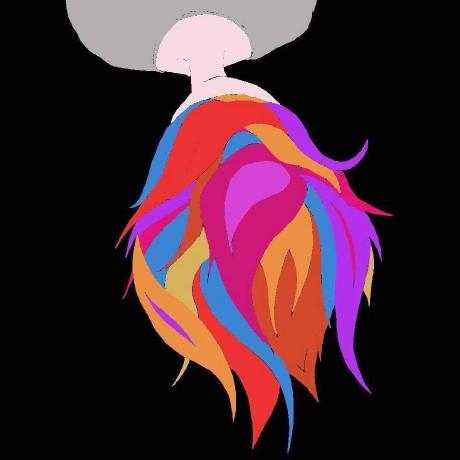
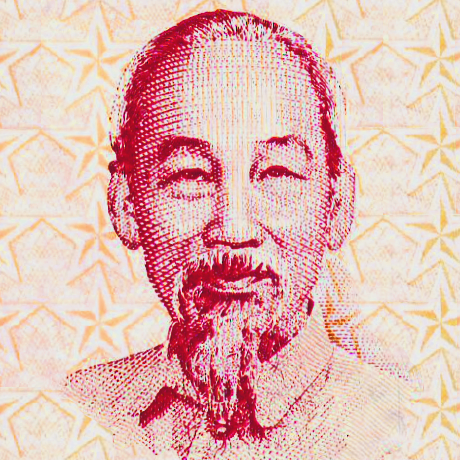
Text-to-3D & Image-to-3D & Mesh Exportation with NeRF + Diffusion.
A pytorch implementation of the text-to-3D model Dreamfusion, powered by the Stable Diffusion text-to-2D model.
ADVERTISEMENT: Please check out threestudio for recent improvements and better implementation in 3D content generation!
NEWS (2023.6.12):
https://user-images.githubusercontent.com/25863658/232403162-51b69000-a242-4b8c-9cd9-4242b09863fa.mp4
-O): 
-O2): git clone https://github.com/ashawkey/stable-dreamfusion.git
cd stable-dreamfusion
To avoid python package conflicts, we recommend using a virtual environment, e.g.: using conda or venv:
python -m venv venv_stable-dreamfusion
source venv_stable-dreamfusion/bin/activate # you need to repeat this step for every new terminal
pip install -r requirements.txt
To use image-conditioned 3D generation, you need to download some pretrained checkpoints manually:
zero123-xl.ckpt by default, and it is hard-coded in guidance/zero123_utils.py.
    cd pretrained/zero123
    wget https://zero123.cs.columbia.edu/assets/zero123-xl.ckpt
preprocess_image.py.
    mkdir pretrained/omnidata
    cd pretrained/omnidata
    # assume gdown is installed
    gdown '1Jrh-bRnJEjyMCS7f-WsaFlccfPjJPPHI&confirm=t' # omnidata_dpt_depth_v2.ckpt
    gdown '1wNxVO4vVbDEMEpnAi_jwQObf2MFodcBR&confirm=t' # omnidata_dpt_normal_v2.ckpt
To use DeepFloyd-IF, you need to accept the usage conditions from hugging face, and login with huggingface-cli login in command line.
For DMTet, we port the pre-generated 32/64/128 resolution tetrahedron grids under tets.
The 256 resolution one can be found here.
load to build the extension at runtime.
We also provide the setup.py to build each extension:
cd stable-dreamfusion
install all extension modules
bash scripts/install_ext.sh
if you want to install manually, here is an example:
pip install ./raymarching # install to python path (you still need the raymarching/ folder, since this only installs the built extension.)
pip install -i https://pypi.taichi.graphics/simple/ taichi-nightly
pip install -U diffusers). If the problem still holds, reporting a bug issue will be appreciated![F glutil.cpp:338] eglInitialize() failed Aborted (core dumped): this usually indicates problems in OpenGL installation. Try to re-install Nvidia driver, or use nvidia-docker as suggested in https://github.com/ashawkey/stable-dreamfusion/issues/131 if you are using a headless server.TypeError: xxx_forward(): incompatible function arguments: this happens when we update the CUDA source and you used setup.py to install the extensions earlier. Try to re-install the corresponding extension (e.g., pip install ./gridencoder).First time running will take some time to compile the CUDA extensions.
#### stable-dreamfusion setting
Instant-NGP NeRF Backbone
+ faster rendering speed
+ less GPU memory (~16G)
- need to build CUDA extensions (a CUDA-free Taichi backend is available)
train with text prompt (with the default settings)
-O equals --cuda_ray --fp16
--cuda_ray enables instant-ngp-like occupancy grid based acceleration.
python main.py --text "a hamburger" --workspace trial -O
reduce stable-diffusion memory usage with --vram_O
enable various vram savings (https://huggingface.co/docs/diffusers/optimization/fp16).
python main.py --text "a hamburger" --workspace trial -O --vram_O
You can collect arguments in a file. You can override arguments by specifying them after --file. Note that quoted strings can't be loaded from .args files...
python main.py --file scripts/res64.args --workspace trial_awesome_hamburger --text "a photo of an awesome hamburger"
use CUDA-free Taichi backend with --backbone grid_taichi
python3 main.py --text "a hamburger" --workspace trial -O --backbone grid_taichi
choose stable-diffusion version (support 1.5, 2.0 and 2.1, default is 2.1 now)
python main.py --text "a hamburger" --workspace trial -O --sd_version 1.5
use a custom stable-diffusion checkpoint from hugging face:
python main.py --text "a hamburger" --workspace trial -O --hf_key andite/anything-v4.0
use DeepFloyd-IF for guidance (experimental):
python main.py --text "a hamburger" --workspace trial -O --IF
python main.py --text "a hamburger" --workspace trial -O --IF --vram_O # requires ~24G GPU memory
we also support negative text prompt now:
python main.py --text "a rose" --negative "red" --workspace trial -O
after the training is finished:
test (exporting 360 degree video)
python main.py --workspace trial -O --test
also save a mesh (with obj, mtl, and png texture)
python main.py --workspace trial -O --test --save_mesh
test with a GUI (free view control!)
python main.py --workspace trial -O --test --gui
Vanilla NeRF backbone
+ pure pytorch, no need to build extensions!
- slow rendering speed
- more GPU memory
train
-O2 equals --backbone vanilla
python main.py --text "a hotdog" --workspace trial2 -O2
if CUDA OOM, try to reduce NeRF sampling steps (--num_steps and --upsample_steps)
python main.py --text "a hotdog" --workspace trial2 -O2 --num_steps 64 --upsample_steps 0
test
python main.py --workspace trial2 -O2 --test
python main.py --workspace trial2 -O2 --test --save_mesh
python main.py --workspace trial2 -O2 --test --gui # not recommended, FPS will be low.
DMTet finetuning
use --dmtet and --init_with  to finetune the mesh at higher reslution
python main.py -O --text "a hamburger" --workspace trial_dmtet --dmtet --iters 5000 --init_with trial/checkpoints/df.pth
init dmtet with a mesh to generate texture
require install of cubvh: pip install git+https://github.com/ashawkey/cubvh
remove --lock_geo to also finetune geometry, but performance may be bad.
python main.py -O --text "a white bunny with red eyes" --workspace trial_dmtet_mesh --dmtet --iters 5000 --init_with ./data/bunny.obj --lock_geo
test & export the mesh
python main.py -O --text "a hamburger" --workspace trial_dmtet --dmtet --iters 5000 --test --save_mesh
gui to visualize dmtet
python main.py -O --text "a hamburger" --workspace trial_dmtet --dmtet --iters 5000 --test --gui
Image-conditioned 3D Generation
preprocess input image
note: the results of image-to-3D is dependent on zero-1-to-3's capability. For best performance, the input image should contain a single front-facing object, it should have square aspect ratio, with <1024 pixel resolution. Check the examples under ./data.
this will exports _rgba.png, _depth.png, and _normal.png to the directory containing the input image.
python preprocess_image.py .png
python preprocess_image.py .png --border_ratio 0.4 # increase border_ratio if the center object appears too large and results are unsatisfying.
zero123 train
pass in the processed _rgba.png by --image and do NOT pass in --text to enable zero-1-to-3 backend.
python main.py -O --image _rgba.png --workspace trial_image --iters 5000
if the image is not exactly front-view (elevation = 0), adjust default_polar (we use polar from 0 to 180 to represent elevation from 90 to -90)
python main.py -O --image _rgba.png --workspace trial_image --iters 5000 --default_polar 80
by default we leverage monocular depth estimation to aid image-to-3d, but if you find the depth estimation inaccurate and harms results, turn it off by:
python main.py -O --image _rgba.png --workspace trial_image --iters 5000 --lambda_depth 0
python main.py -O --image _rgba.png --workspace trial_image_dmtet --dmtet --init_with trial_image/checkpoints/df.pth
zero123 with multiple images
python main.py -O --image_config config/.csv --workspace trial_image --iters 5000
render  images per batch (default 1)
python main.py -O --image_config config/.csv --workspace trial_image --iters 5000 --batch_size 4
providing both --text and --image enables stable-diffusion backend (similar to make-it-3d)
python main.py -O --image hamburger_rgba.png --text "a DSLR photo of a delicious hamburger" --workspace trial_image_text --iters 5000
python main.py -O --image hamburger_rgba.png --text "a DSLR photo of a delicious hamburger" --workspace trial_image_text_dmtet --dmtet --init_with trial_image_text/checkpoints/df.pth
test / visualize
python main.py -O --image _rgba.png --workspace trial_image_dmtet --dmtet --test --save_mesh
python main.py -O --image _rgba.png --workspace trial_image_dmtet --dmtet --test --gui
Debugging
Can save guidance images for debugging purposes. These get saved in trial_hamburger/guidance.
Warning: this slows down training considerably and consumes lots of disk space!
python main.py --text "a hamburger" --workspace trial_hamburger -O --vram_O --save_guidance --save_guidance_interval 5 # save every 5 steps
For example commands, check scripts.
For advanced tips and other developing stuff, check Advanced Tips.
Reproduce the paper CLIP R-precision evaluation
After the testing part in the usage, the validation set containing projection from different angle is generated. Test the R-precision between prompt and the image.(R=1)
python r_precision.py --text "a snake is flying in the sky" --workspace snake_HQ --latest ep0100 --mode depth --clip clip-ViT-B-16
This work is based on an increasing list of amazing research works and open-source projects, thanks a lot to all the authors for sharing!
    @article{poole2022dreamfusion,
        author = {Poole, Ben and Jain, Ajay and Barron, Jonathan T. and Mildenhall, Ben},
        title = {DreamFusion: Text-to-3D using 2D Diffusion},
        journal = {arXiv},
        year = {2022},
    }
   @inproceedings{lin2023magic3d,
      title={Magic3D: High-Resolution Text-to-3D Content Creation},
      author={Lin, Chen-Hsuan and Gao, Jun and Tang, Luming and Takikawa, Towaki and Zeng, Xiaohui and Huang, Xun and Kreis, Karsten and Fidler, Sanja and Liu, Ming-Yu and Lin, Tsung-Yi},
      booktitle={IEEE Conference on Computer Vision and Pattern Recognition ({CVPR})},
      year={2023}
    }
    @misc{liu2023zero1to3,
        title={Zero-1-to-3: Zero-shot One Image to 3D Object},
        author={Ruoshi Liu and Rundi Wu and Basile Van Hoorick and Pavel Tokmakov and Sergey Zakharov and Carl Vondrick},
        year={2023},
        eprint={2303.11328},
        archivePrefix={arXiv},
        primaryClass={cs.CV}
    }
    @article{armandpour2023re,
      title={Re-imagine the Negative Prompt Algorithm: Transform 2D Diffusion into 3D, alleviate Janus problem and Beyond},
      author={Armandpour, Mohammadreza and Zheng, Huangjie and Sadeghian, Ali and Sadeghian, Amir and Zhou, Mingyuan},
      journal={arXiv preprint arXiv:2304.04968},
      year={2023}
    }
    @inproceedings{melaskyriazi2023realfusion,
        author = {Melas-Kyriazi, Luke and Rupprecht, Christian and Laina, Iro and Vedaldi, Andrea},
        title = {RealFusion: 360 Reconstruction of Any Object from a Single Image},
        booktitle={CVPR}
        year = {2023},
        url = {https://arxiv.org/abs/2302.10663},
    }
    @article{chen2023fantasia3d,
        title={Fantasia3D: Disentangling Geometry and Appearance for High-quality Text-to-3D Content Creation},
        author={Rui Chen and Yongwei Chen and Ningxin Jiao and Kui Jia},
        journal={arXiv preprint arXiv:2303.13873},
        year={2023}
    }
    @article{tang2023make,
        title={Make-It-3D: High-Fidelity 3D Creation from A Single Image with Diffusion Prior},
        author={Tang, Junshu and Wang, Tengfei and Zhang, Bo and Zhang, Ting and Yi, Ran and Ma, Lizhuang and Chen, Dong},
        journal={arXiv preprint arXiv:2303.14184},
        year={2023}
    }
    @misc{rombach2021highresolution,
        title={High-Resolution Image Synthesis with Latent Diffusion Models},
        author={Robin Rombach and Andreas Blattmann and Dominik Lorenz and Patrick Esser and Björn Ommer},
        year={2021},
        eprint={2112.10752},
        archivePrefix={arXiv},
        primaryClass={cs.CV}
    }
@misc{von-platen-etal-2022-diffusers,
        author = {Patrick von Platen and Suraj Patil and Anton Lozhkov and Pedro Cuenca and Nathan Lambert and Kashif Rasul and Mishig Davaadorj and Thomas Wolf},
        title = {Diffusers: State-of-the-art diffusion models},
        year = {2022},
        publisher = {GitHub},
        journal = {GitHub repository},
        howpublished = {\url{https://github.com/huggingface/diffusers}}
    }
If you find this work useful, a citation will be appreciated via:
@misc{stable-dreamfusion,
    Author = {Jiaxiang Tang},
    Year = {2022},
    Note = {https://github.com/ashawkey/stable-dreamfusion},
    Title = {Stable-dreamfusion: Text-to-3D with Stable-diffusion}
}
 →
→ →
→ →
→ →
→ →
→