1
 →

Learn how to design large-scale systems. Prep for the system design interview. Includes Anki flashcards.
donnemartin/system-design-primer is an open-source project on GitHub, mainly written in Python. Learn how to design large-scale systems. Prep for the system design interview. Includes Anki flashcards. It currently holds 377,189 stars and 59,206 forks with 637 open issues, and was last pushed on 2026-09-15 (repository created 2017-02-26).
Git Homed tracks it on the Today's Trending board, currently at rank #29 with 192 new stars today.
English ∙ 日本語 ∙ 简体中文 ∙ 繁體中文 | العَرَبِيَّة ∙ বাংলা ∙ Português do Brasil ∙ Deutsch ∙ ελληνικά ∙ עברית ∙ Italiano ∙ 한국어 ∙ فارسی ∙ Polski ∙ русский язык ∙ Español ∙ ภาษาไทย ∙ Türkçe ∙ tiếng Việt ∙ Français | Add Translation
Help translate this guide!
Learn how to design large-scale systems.
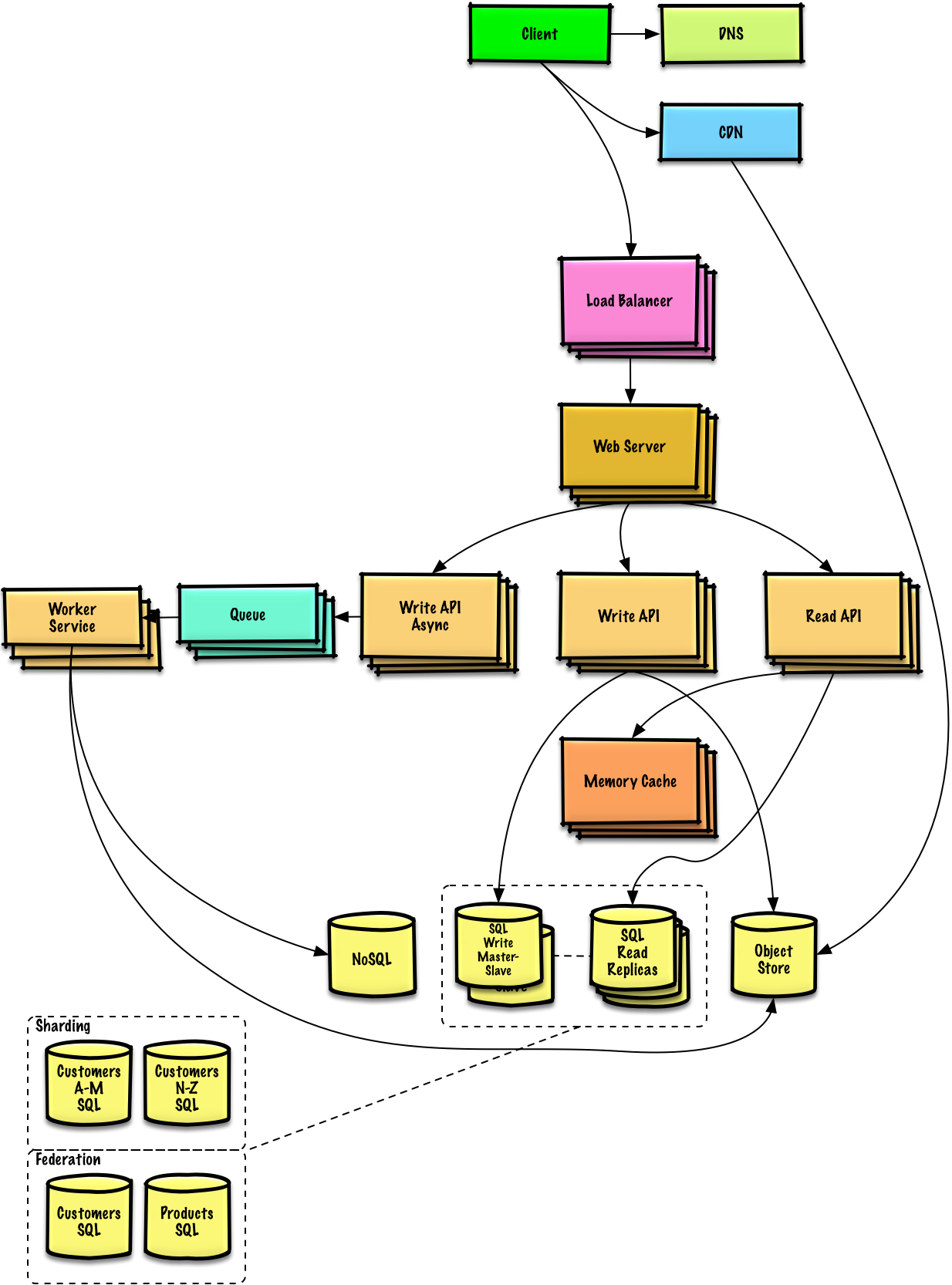
> Prep for the system design interview.
Learning how to design scalable systems will help you become a better engineer.
System design is a broad topic. There are a vast number of resources scattered throughout the web on system design principles.
This repo is an organized collection of resources to help you learn how to build systems at scale.
This is a continually updated, open source project.
Contributions are welcome!
In addition to coding interviews, system design is a required component of the technical interview process at many tech companies.
Practice common system design interview questions and compare your results with sample solutions: discussions, code, and diagrams.
Additional topics for interview prep:
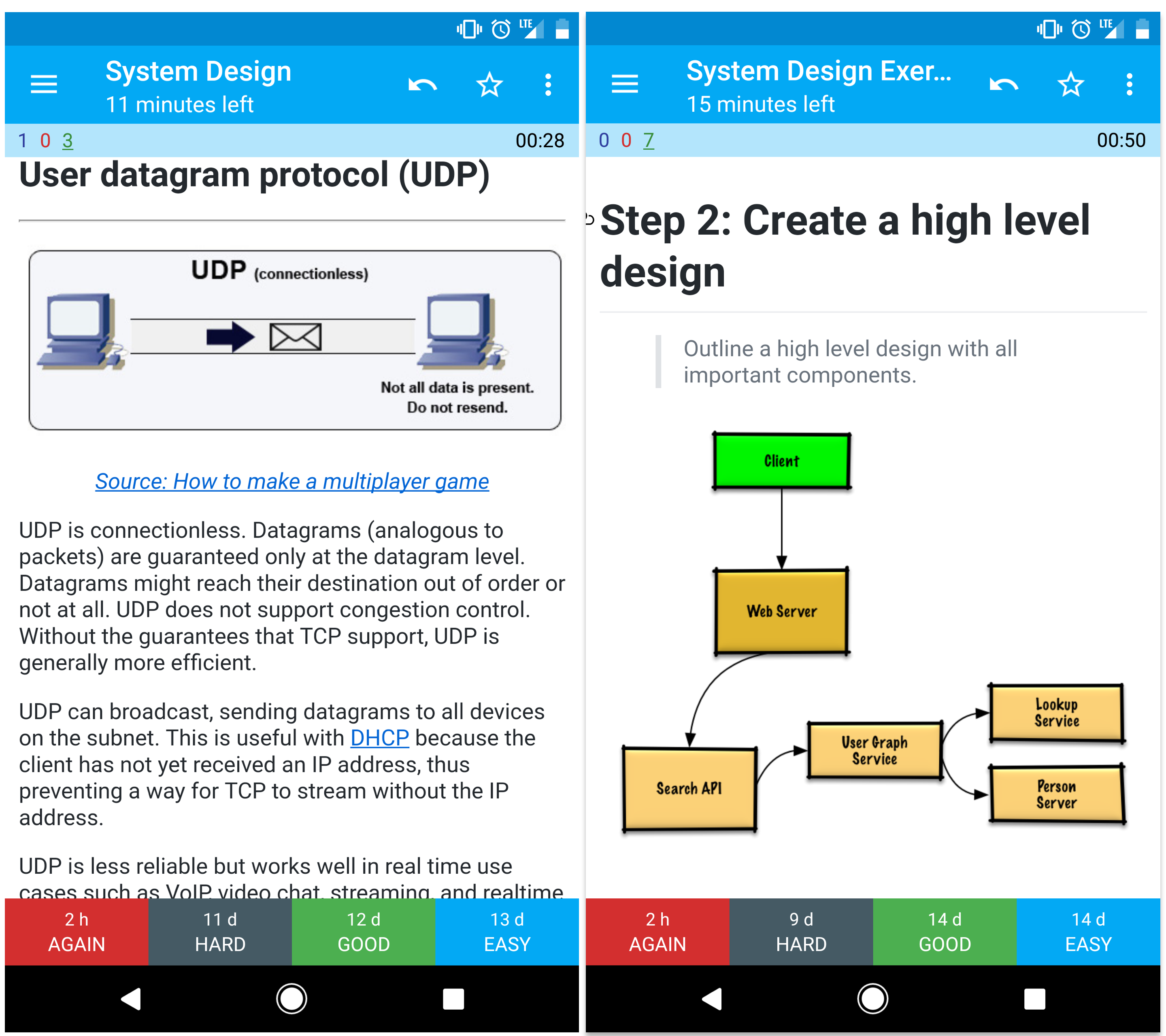
The provided Anki flashcard decks use spaced repetition to help you retain key system design concepts.
Great for use while on-the-go.Looking for resources to help you prep for the Coding Interview?
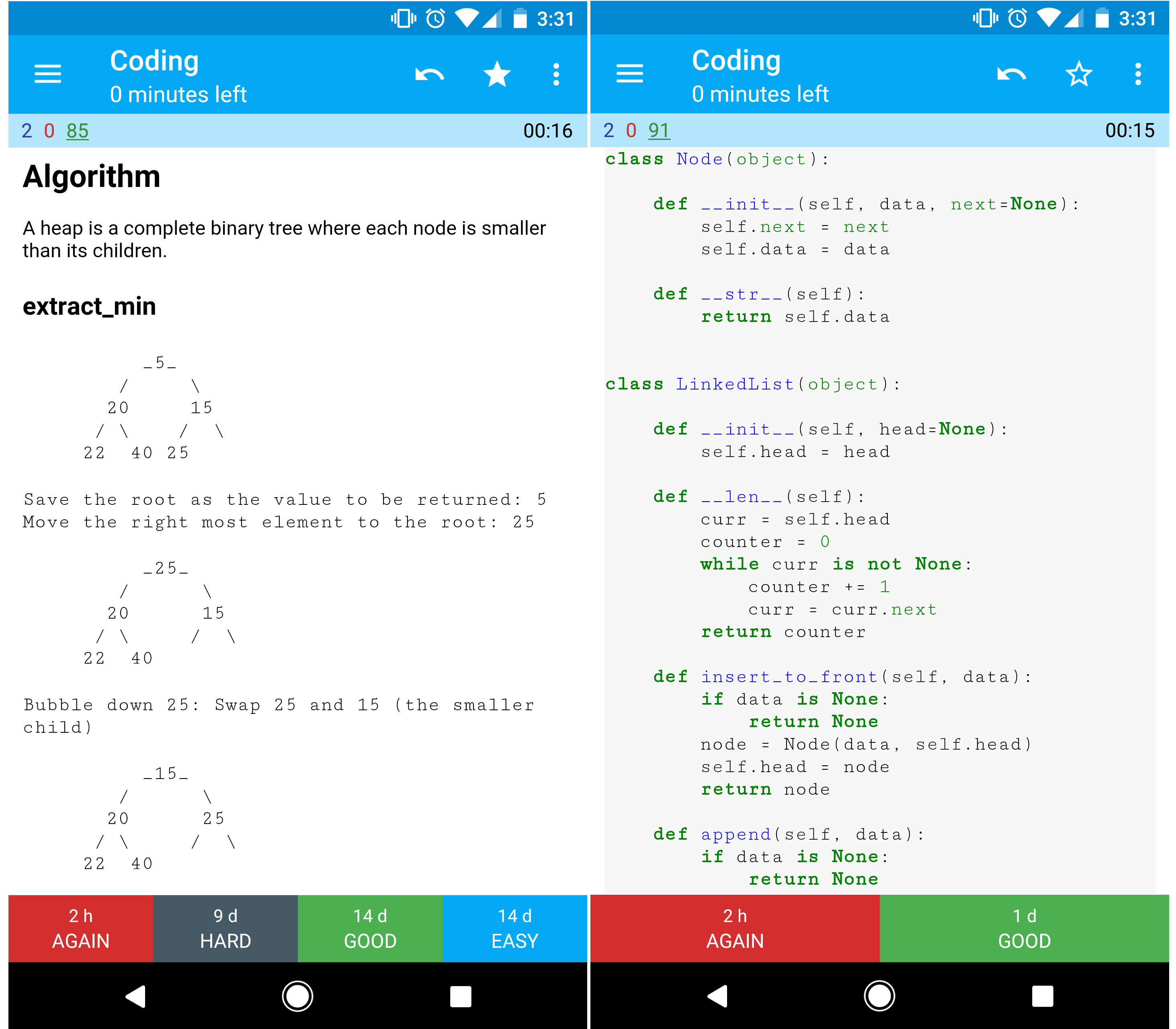
Check out the sister repo Interactive Coding Challenges, which contains an additional Anki deck:
Learn from the community.
Feel free to submit pull requests to help:
Review the Contributing Guidelines.
Summaries of various system design topics, including pros and cons. Everything is a trade-off.
> Each section contains links to more in-depth resources.
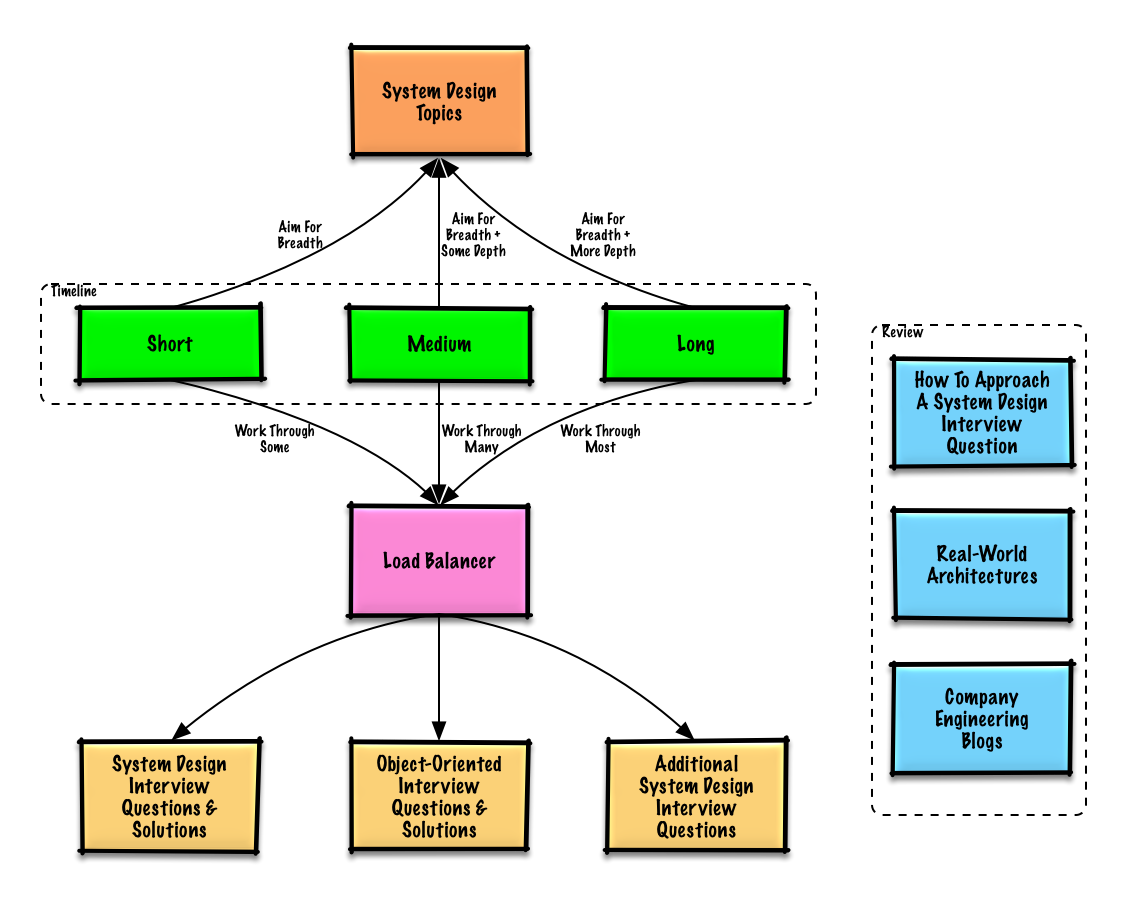
Suggested topics to review based on your interview timeline (short, medium, long).
Q: For interviews, do I need to know everything here?
A: No, you don't need to know everything here to prepare for the interview.
What you are asked in an interview depends on variables such as:
Start broad and go deeper in a few areas. It helps to know a little about various key system design topics. Adjust the following guide based on your timeline, experience, what positions you are interviewing for, and which companies you are interviewing with.
How to tackle a system design interview question.
The system design interview is an open-ended conversation. You are expected to lead it.
You can use the following steps to guide the discussion. To help solidify this process, work through the System design interview questions with solutions section using the following steps.
Gather requirements and scope the problem. Ask questions to clarify use cases and constraints. Discuss assumptions.
Outline a high level design with all important components.
Dive into details for each core component. For example, if you were asked to design a url shortening service, discuss:
Identify and address bottlenecks, given the constraints. For example, do you need the following to address scalability issues?
You might be asked to do some estimates by hand. Refer to the Appendix for the following resources:
Check out the following links to get a better idea of what to expect:
Common system design interview questions with sample discussions, code, and diagrams.
> Solutions linked to content in the solutions/ folder.
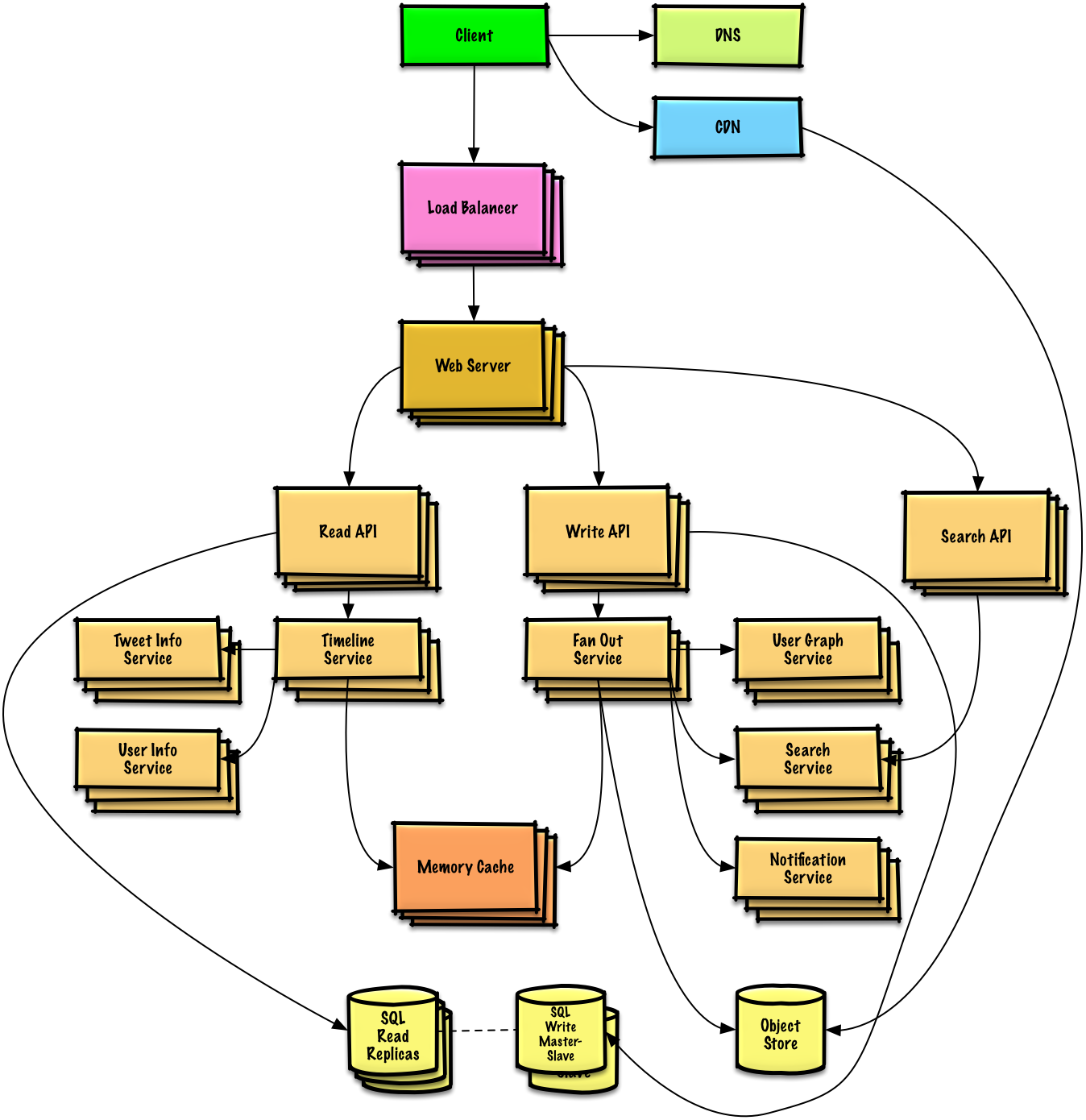
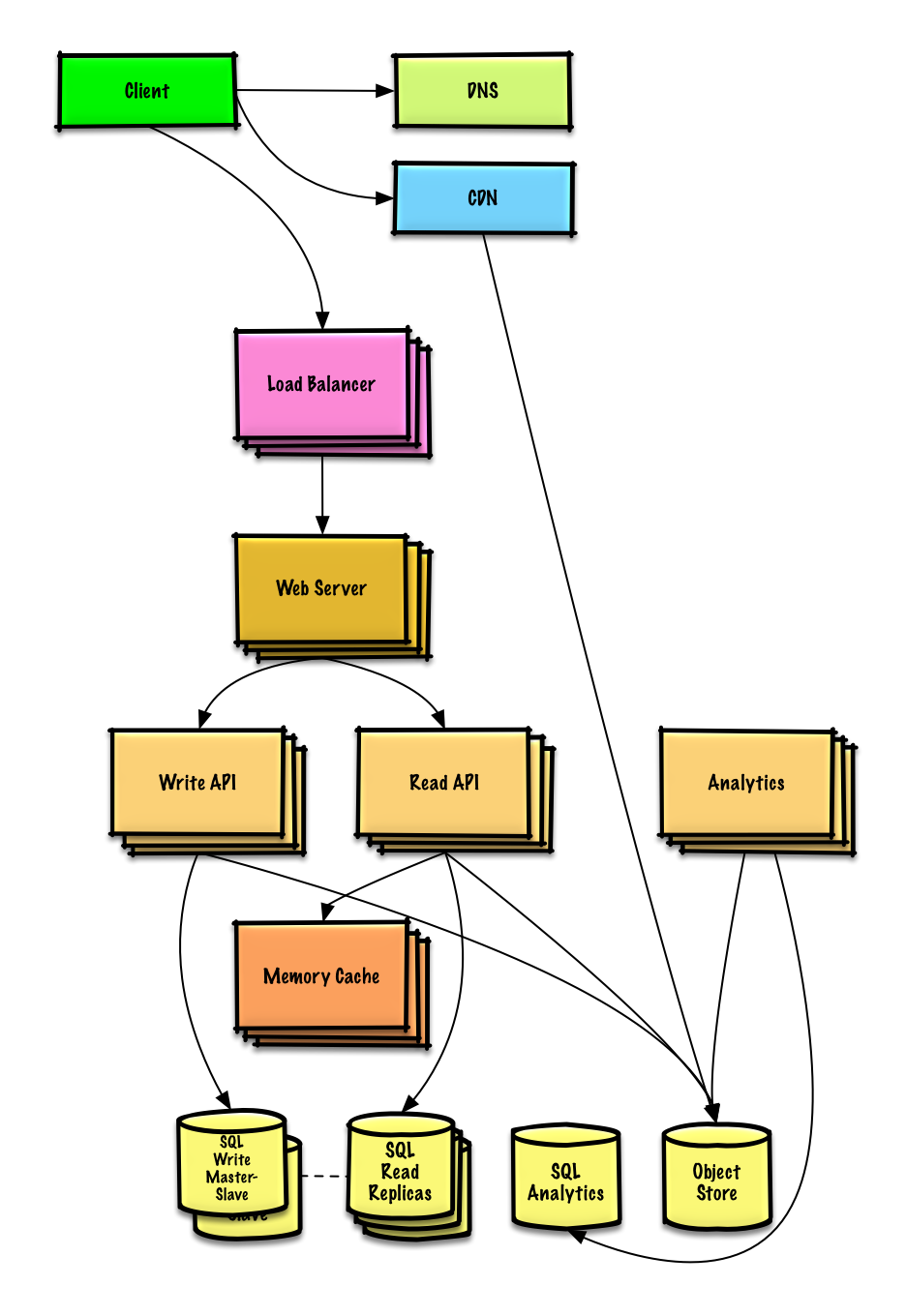
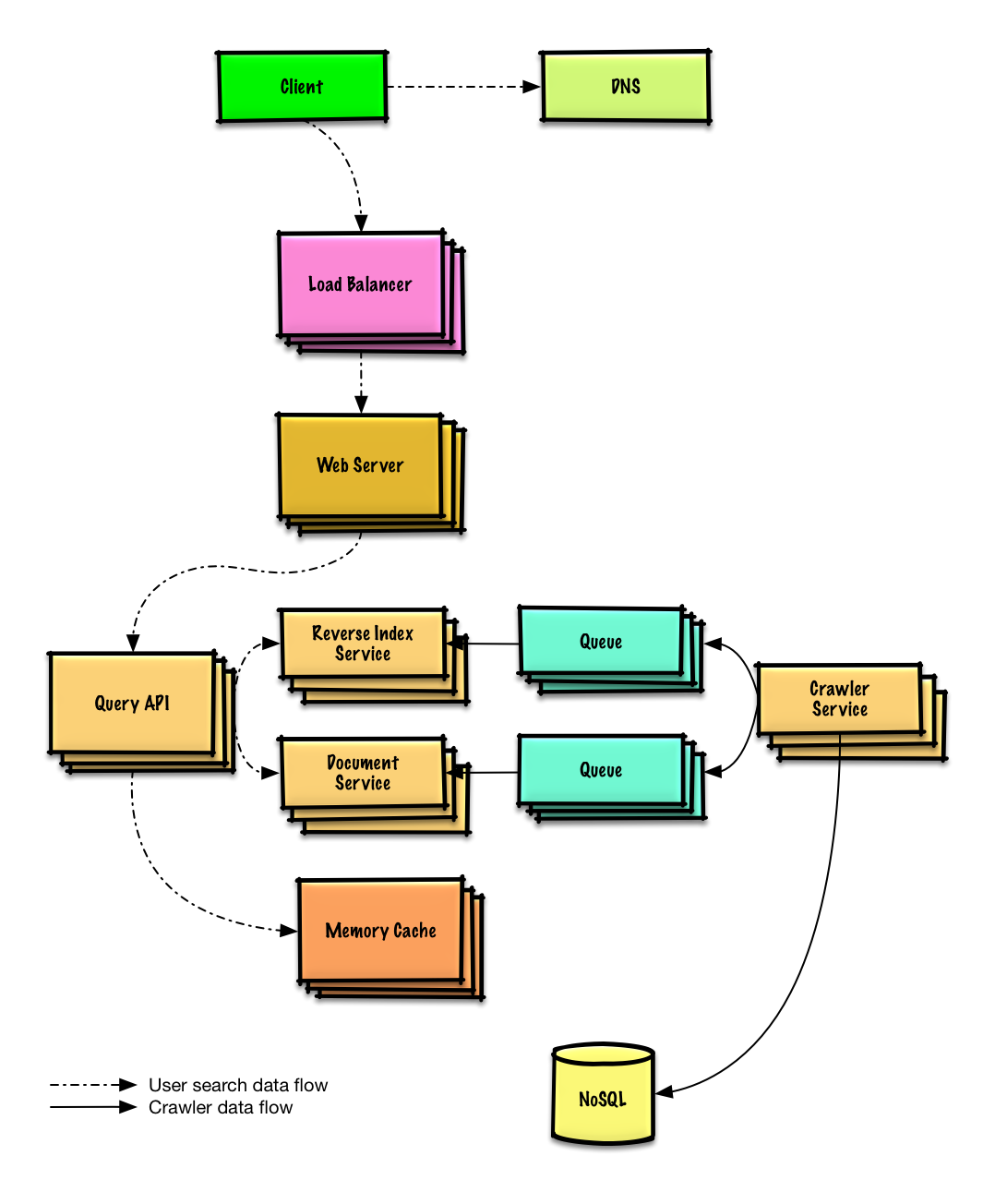
| Question | | |---|---| | Design Pastebin.com (or Bit.ly) | Solution | | Design the Twitter timeline and search (or Facebook feed and search) | Solution | | Design a web crawler | Solution | | Design Mint.com | Solution | | Design the data structures for a social network | Solution | | Design a key-value store for a search engine | Solution | | Design Amazon's sales ranking by category feature | Solution | | Design a system that scales to millions of users on AWS | Solution | | Add a system design question | Contribute |
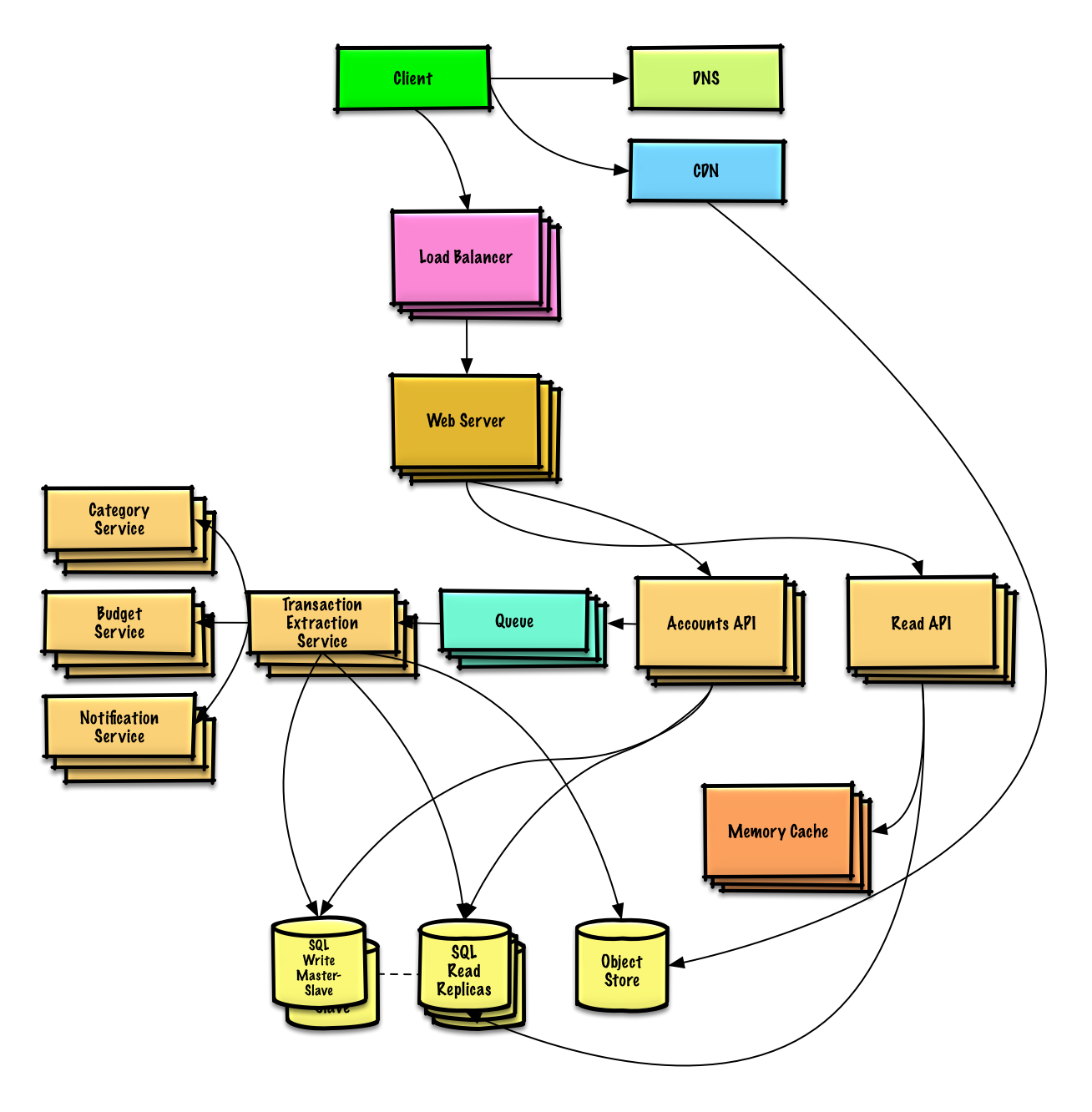
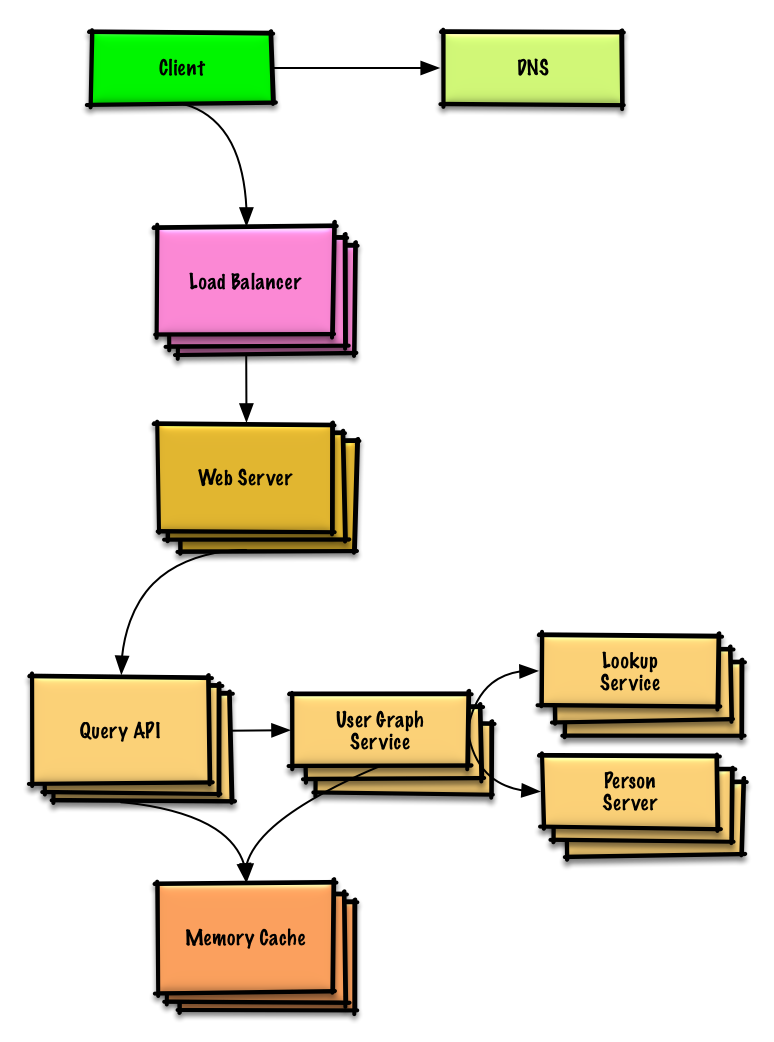
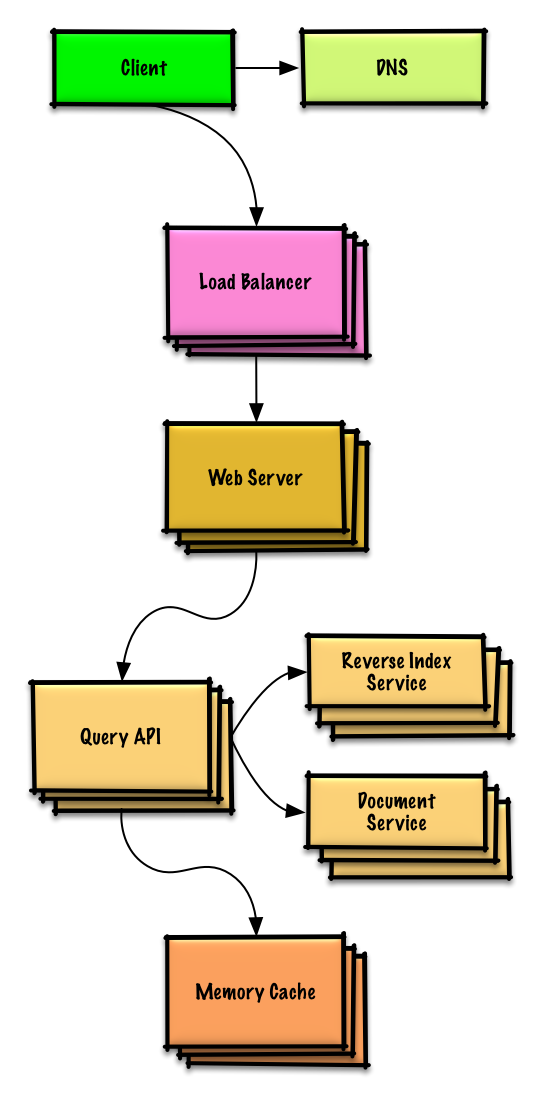
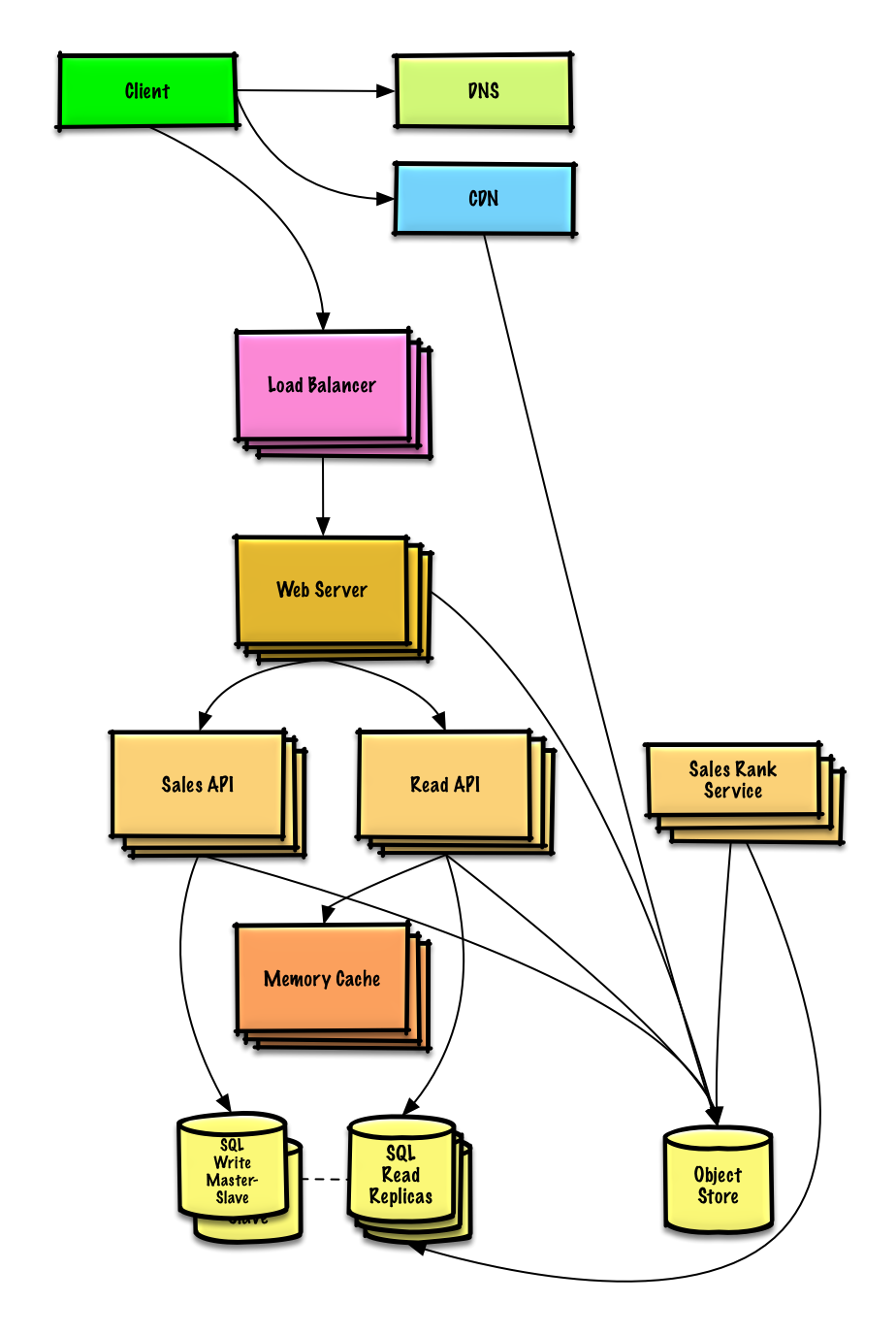
Common object-oriented design interview questions with sample discussions, code, and diagrams.
> Solutions linked to content in the solutions/ folder.
Note: This section is under development
| Question | | |---|---| | Design a hash map | Solution | | Design a least recently used cache | Solution | | Design a call center | Solution | | Design a deck of cards | Solution | | Design a parking lot | Solution | | Design a chat server | Solution | | Design a circular array | Contribute | | Add an object-oriented design question | Contribute |
New to system design?
First, you'll need a basic understanding of common principles, learning about what they are, how they are used, and their pros and cons.
Scalability Lecture at Harvard
Next, we'll look at high-level trade-offs:
Then we'll dive into more specific topics such as DNS, CDNs, and load balancers.
A service is scalable if it results in increased performance in a manner proportional to resources added. Generally, increasing performance means serving more units of work, but it can also be to handle larger units of work, such as when datasets grow.1
Another way to look at performance vs scalability:
Latency is the time to perform some action or to produce some result.
Throughput is the number of such actions or results per unit of time.
Generally, you should aim for maximal throughput with acceptable latency.
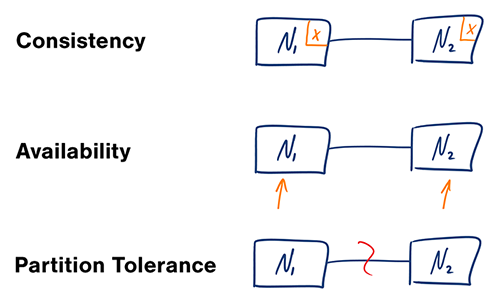
In a distributed computer system, you can only support two of the following guarantees:
Waiting for a response from the partitioned node might result in a timeout error. CP is a good choice if your business needs require atomic reads and writes.
Responses return the most readily available version of the data available on any node, which might not be the latest. Writes might take some time to propagate when the partition is resolved.
AP is a good choice if the business needs to allow for eventual consistency or when the system needs to continue working despite external errors.
With multiple copies of the same data, we are faced with options on how to synchronize them so clients have a consistent view of the data. Recall the definition of consistency from the CAP theorem - Every read receives the most recent write or an error.
After a write, reads may or may not see it. A best effort approach is taken.
This approach is seen in systems such as memcached. Weak consistency works well in real time use cases such as VoIP, video chat, and realtime multiplayer games. For example, if you are on a phone call and lose reception for a few seconds, when you regain connection you do not hear what was spoken during connection loss.
After a write, reads will eventually see it (typically within milliseconds). Data is replicated asynchronously.
This approach is seen in systems such as DNS and email. Eventual consistency works well in highly available systems.
After a write, reads will see it. Data is replicated synchronously.
This approach is seen in file systems and RDBMSes. Strong consistency works well in systems that need transactions.
There are two complementary patterns to support high availability: fail-over and replication.
With active-passive fail-over, heartbeats are sent between the active and the passive server on standby. If the heartbeat is interrupted, the passive server takes over the active's IP address and re
→ →
 →
 →
 →
 →
 →
 →