1
 →
→
A general-purpose AIGC video engine: script to finished film in one pipeline — dramas, ads, product videos, otome games, and more. | 通用 AIGC 视频引擎 —— 从剧本到成片一条流水线,漫剧、广告、电商、乙游皆可
They say you're obsolete.
Maybe it's the whole idea of "working for someone else" that's obsolete.
In the age of AI, the real question isn't whether machines replace people.
The real question is:
Who owns the machines?
Who owns the pipeline?
Who owns industrialized productivity?
If the answer is always Big Tech,
then AI isn't empowerment.
It's just a new wall.
I'm Eric.
This isn't a demo.
Not a toy.
Not a crippled edition.
This is the industrialized drama-production line our own team runs every day.
From script to storyboard, from assets to finished film — the whole chain.
Because people aren't beasts of burden.
Because creativity is humanity's last line of defense.
What DramaClaw sets out to do is simple:
Tear down the wall.
Put the industrialized drama-production power that only Big Tech had
into the hands of ordinary creators.
The code is here.
If this resonates, leave a ⭐.
We'll keep tearing down walls.
And yes, you can make money with it.
DramaClaw is Elastic License 2.0. Run it, modify it, sell what you build with it —
the standalone version is free for commercial use, no permission needed.
We ask for one thing: a small "Powered by DramaClaw" in the corner of your UI.
The only door still closed is wrapping it up as a hosted SaaS for other people; that license isn't open yet.
Why, and the FAQ: #475.


English | 简体中文 | Tiếng Việt | ไทย | Website | Docs | Quick Start

Real short dramas our team produced on this very pipeline — click a link to play.
 归灵司 ▶ 第 1 集 |
 鲁班 ▶ 第 1 集 |
 师兄你怎么不舔了 ▶ 第 1 集 |
 天命不可欺 ▶ 第 02 集 · 第 58 集 |
 乌龙仙途 ▶ 第 1 集 |
 非遗㑇舞 ▶ 播放 |
More clips: 3D 动漫混剪 demo · 动态打斗
DramaClaw is a source-available production line for AI drama — and, increasingly, for any visual story you want to tell with generative models. It has two faces that share one asset library and one agent:
It's built for creators, indie studios and creative engineers — run the whole "drama factory" on your own machine, without stitching together a dozen disconnected tools or handing your material to an opaque black-box cloud service. Although it's built around drama, the same canvas and pipeline carry to short-form ads, e-commerce product videos and other visual formats.

One prompt to Xia Director (right) became this 17-node, 32-edge workflow on the canvas (left): brief → story direction → character and set references → five shot first frames → five shot videos → voice-over and score → final cut.
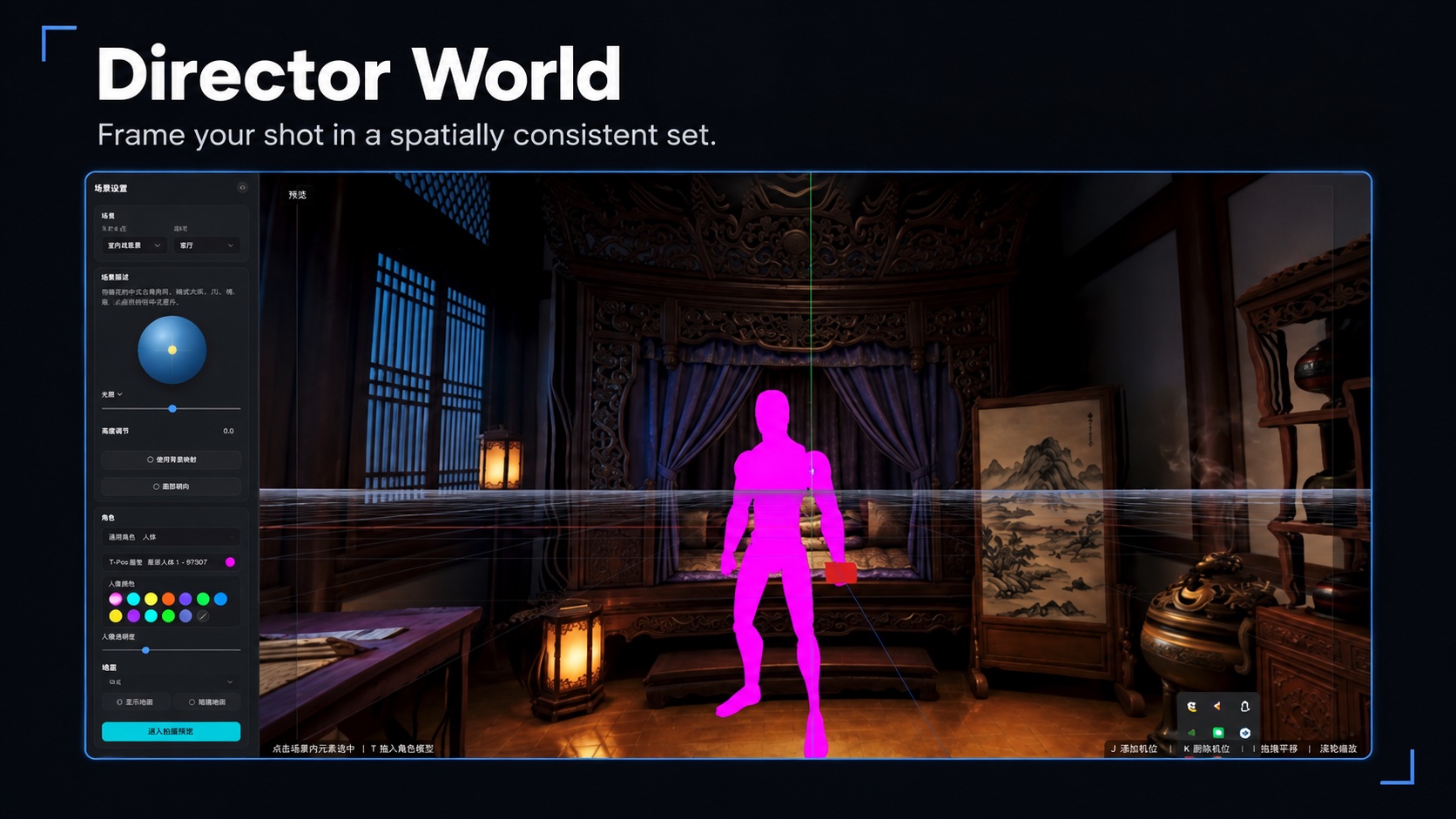
Screenshot-based feature illustration; interface details may differ from the current release.

Every step has its own interface — run them in order, skip steps, resume from any checkpoint, or even plug in your own orchestrator.

Screenshot-based feature illustration; interface details may differ from the current release.

Screenshot-based feature illustration; interface details may differ from the current release.

Screenshot-based feature illustration; interface details may differ from the current release.
Today
A canvas that understands drama, and an agent that works on it. Generic node canvases will wire anything together but know nothing about episodes, characters or shots; series tools know the craft but lock you into a wizard. XiaHua gives you the free canvas with drama-aware nodes and skills, and Xia Director is being built to lay out, run and review those graphs for you. That combination is where DramaClaw is going.
Built for novel-to-short-drama. General workflow tools can wire nodes together, but they don't know what an "episode beat" is, don't understand why a character's cross-scene identity consistency matters, and won't guard a chapter's emotional arc across image + voice + editing. DramaClaw builds all that judgment into the tool.
Canvas and pipeline, not canvas or pipeline. Most tools give you either a free node canvas or a rigid wizard. DramaClaw runs both as dual tracks over one asset library: explore on the canvas, commit what works to the series, project the series back onto a canvas. The agent works on both.
Every step is decomposable. Each stage is an independent async task with its own interface. Run sequentially, skip steps, resume mid-way — the toolchain itself is the product, with no hidden black box.
Self-hostable, model-neutral. Your manuscript, your characters, your models, your servers. Use closed-source frontier models when you want the best results; switch to open-weight models when you want full control. DramaClaw won't lock you into any single vendor.
The edge isn't "more generation" — it's organizing the whole short-drama production loop (script → assets → shots → canvas → final cut) into something reusable, collaborative and scalable.
Legend: ✅ Full · ◐ Partial · ○ Planned · ❌ None — competitor names partially masked; comparison based on publicly available product docs and positioning.
| Capability | L\*TV | R\*Hub | T\*Now | S\*ko | U\*dream | O\II | J\/K\* | DramaClaw | |---|:--:|:--:|:--:|:--:|:--:|:--:|:--:|:--:| | Storyboard preview (script→shots, boards) | ◐ | ✅ | ◐ | ✅ | ◐ | ❌ | ❌ | ✅ | | Interactive series (multi-episode, branching, IP) | ◐ | ◐ | ◐ | ✅ | ◐ | ❌ | ❌ | ✅ | | Asset library (characters/scenes/props/voices) | ◐ | ❌ | ◐ | ✅ | ◐ | ○ | ❌ | ✅ | | Scene consistency (variants, 360°, multi-state) | ✅ | ◐ | ❌ | ❌ | ○ | ❌ | ❌ | ✅ | | Director's world (360°/3D set, camera, framing) | ✅ | ◐ | ❌ | ❌ | ◐ | ❌ | ❌ | ✅ | | Final delivery (multi-shot, subtitles/SRT, pack) | ✅ | ○ | ○ | ✅ | ✅ | ❌ | ❌ | ✅ | | Team production (sharing, roles, tasks, cost) | ✅ | ✅ | ○ | ✅ | ○ | ○ | ○ | ✅ | | Infinite canvas (node-based, free exploration) | ✅ | ✅ | ✅ | ❌ | ✅ | ✅ | ✅ | ✅ | | Dual-track (main pipeline + canvas exploration) | ❌ | ❌ | ❌ | ❌ | ❌ | ❌ | ❌ | ✅ | | Custom style (templates, prompts, negatives) | ✅ | ◐ | ○ | ✅ | ◐ | ○ | ◐ | ✅ | | Built-in agent (assistant, skills, suggestions) | ✅ | ✅ | ✅ | ○ | ✅ | ○ | ✅ | ✅ | | Creative companion (persona, nudges, feedback) | ❌ | ❌ | ❌ | ❌ | ❌ | ❌ | ❌ | ✅ | | Source-available (self-host, fork, customize) | ❌ | ❌ | ❌ | ❌ | ❌ | ❌ | ❌ | ✅ |
DramaClaw runs all inference through an OpenAI-compatible gateway — either the official RelayClaw service or the bundled dramaclaw-gateway routing to providers you configure. Nothing runs models on your machine, so the local footprint is light. An ordinary laptop or a small VPS is enough.
| Item | Requirement |
|---|---|
| CPU / RAM | ≥ 2 vCPU / 4 GB recommended (excludes model inference — that runs on the gateway) |
| GPU | Not required for the standard pipeline. Only the optional world extra (voxel / panorama-to-3D) needs a GPU + CUDA image |
| Disk | A few GB for images plus generated media/state under the ce-data volume (no hard minimum) |
| OS | macOS (Apple Silicon / Intel), Windows (Docker Desktop + WSL2 backend), Linux (Docker Engine + compose plugin) |
| Docker | Docker + docker compose |
| Ports | 8080 web UI · 8780 REST API · 3000 bundled gateway admin UI (host-only by default, can be widened) |
| Datastores | None required — no Postgres, Redis, Celery or Ray. Tasks run in-process; state lives on the local filesystem (SQLite + files) |
| Network | Outbound access to the official gateway relayclaw.cdnfg.com, and/or to the model providers you configure in the bundled gateway |
Local development (non-Docker) additionally needs Python 3.11–3.12 +uv+ffmpeg. Full prerequisites in the Self-hosting guide.
Every GitHub Release publishes multi-arch (amd64/arm64) images to Docker Hub.
Source build (default) — clone DramaClaw and the bundled dramaclaw-gateway side by side; docker compose up -d --build builds all three services from those two checkouts.
git clone https://github.com/dramaclaw/dramaclaw.git
git clone https://github.com/dramaclaw/dramaclaw-gateway.git   # bundled gateway, built from ../dramaclaw-gateway
cd dramaclaw
cp .env.example .env
Edit .env — set PROMPT_EXPORT_PASSWORD to a non-default value.
docker compose up -d --build   # builds and starts three services: api / newapi (bundled gateway) / web
Both checkouts are plain git repos: edit, git pull, rebuild. Only DramaClaw code changed? docker compose up -d --build api web. Only the gateway? docker compose up -d --build newapi. Gateway clone somewhere else, or prefer Docker to fetch it from git? Set DRAMACLAW_GATEWAY_SRC in .env to that path or to https://github.com/dramaclaw/dramaclaw-gateway.git#main.
No build — pull published images instead (no gateway clone needed):
docker compose -f docker-compose.release.yml up -d
Open the app at ; the REST API is at . In Settings → Model Config pick one of:
newapi gateway; then add your own upstream channels.Pin versions or switch registry in .env (DRAMACLAW_VERSION, DRAMACLAW_GATEWAY_VERSION, DRAMACLAW_IMAGE_PREFIX) — these apply to the image mode (docker-compose.release.yml) only. Mainland China: set DRAMACLAW_IMAGE_PREFIX=claymore-registry.cn-chengdu.cr.aliyuncs.com/dramaclaw and pin both versions (the ACR mirror carries pinned tags only).
Migrating from an older checkout? For the source build, firstgit clone https://github.com/dramaclaw/dramaclaw-gateway.git ../dramaclaw-gateway(the gateway is now built from that sibling checkout; without it the build stops withunable to prepare context).docker-compose.selfhosted.yml/docker-compose.selfhosted.release.ymlhave been removed — usedocker-compose.yml(source build) /docker-compose.release.yml(images). Service names and thece-data/newapi-datavolumes are unchanged; existing data is reused as-is. The bundled gateway's port now binds only to127.0.0.1by default; setST_NEWAPI_BIND=0.0.0.0in.envif you need remote access to it.
git clone https://github.com/dramaclaw/dramaclaw.git
cd dramaclaw
uv sync
cp .env.example .env && $EDITOR .env
uv run novelvideo api --port 8780   # start the REST API (CE defaults to inline tasks, no Ray/Redis)
Frontend in a second terminal: cd frontend && pnpm install && pnpm dev.
Gateway. In Official mode you need nothing else. For Custom or Local + Official Hybrid the API expects a gateway on 127.0.0.1:3000 whose SQLite file is ./state/newapi/one-api.db (that is what "Initialize" in Settings writes to; NEWAPI_ADMIN_BASE_URL in .env already points there). Either run the published image with that directory mounted:
mkdir -p state/newapi
docker run -d --name dramaclaw-gateway -p 127.0.0.1:3000:3000 \
  -v "$PWD/state/newapi:/data" \
  claymorelab/dramaclaw-gateway:v1.0.0-rc.24-dramaclaw.1
or run the gateway from source in the sibling checkout (make dev-api / make dev-web in dramaclaw-gateway, or go build and start the binary with SQLITE_PATH=/dramaclaw/state/newapi/one-api.db).
DramaClaw stays model-neutral — all text / image / video / audio models connect through an OpenAI-compatible gateway. Pick the mode in Settings → Model Config:
dramaclaw-gateway, then add your own provider channels (API keys, model IDs) in its admin UI. Every model DramaClaw calls goes through your channels.The newapi service in docker-compose.yml is dramaclaw-gateway, DramaClaw's own fork of New API. It speaks the DC-Media contract DramaClaw uses for image / video / audio (media roles, references, first / last frames) and converts each request into the provider's native API. Image: claymorelab/dramaclaw-gateway on Docker Hub, pinned by DRAMACLAW_GATEWAY_VERSION in .env. It stays idle in Official mode and is only used once you switch to Custom or Local + Official Hybrid.
Provider adapters shipped in the gateway today (see the channel support matrix for verification status): ComfyUI · MiniMax / Hailuo · VolcEngine Doubao / Seedance · fal.ai · Alibaba · Kling · Jimeng · Vertex AI · Gemini · OpenAI / Sora · Suno. Want another provider? The gateway has a scaffold generator and contribution guide.
| Stage | Official mode (RelayClaw) | Custom / Hybrid mode (bundled gateway) |
|----------------------|----------------------------------------------------|-----------------------------------------------------------|
| Text / LLM | DC-*-LLM models, no mapping needed
→ →
→ →
→ →
→ →
→ →
→